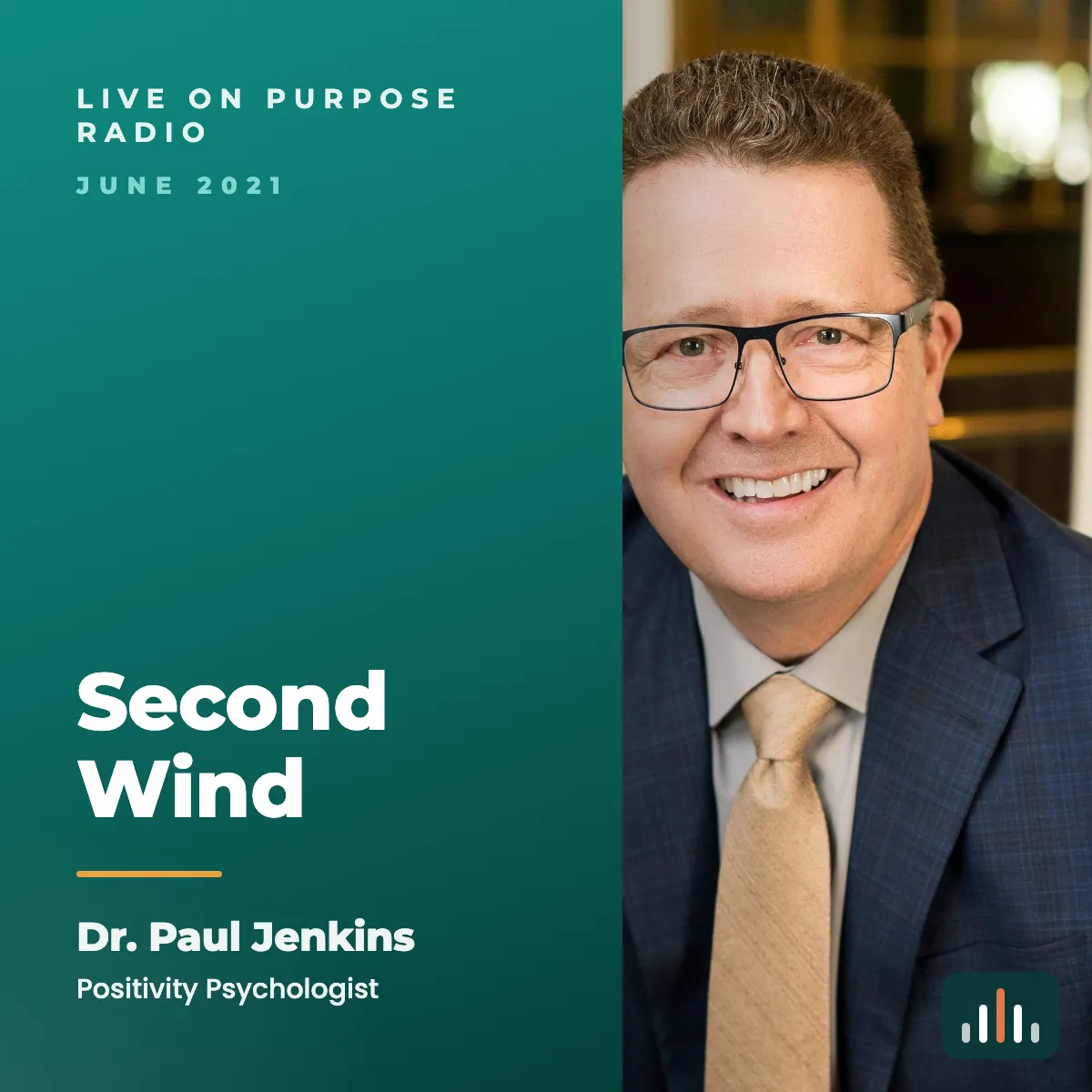
Welcome to Live On Purpose Radio with doctor Paul Jenkins, where you will hear inspiring stories of ordinary people doing extraordinary things. Feed your mind with a regular dose of positive energy and show up for your life every day on purpose. Living on purpose means that you have a purpose and you do it intentionally. And now here's your host, doctor Paul. Hello, everybody.
Welcome back to Live on Purpose Radio. This is doctor Paul, the shrink who expands your life with another episode of Live on Purpose Radio. Joining me today is a speaker, an author. He's actually one of the super attorneys in the state of Texas, Clint Schumacher. Welcome, Clint, to Live On Purpose Radio.
Oh, well, doctor Paul, thank you. It's a great honor and pleasure to get to join you. I'm looking forward to our conversation. Isn't this fun? It is.
It really is. We've... You know what, Clint? I I told you before the show that I have have recently viewed your TEDx doc. Right.
And you talked about resiliency. You talked about just the, the powerful nature of the human spirit that can rise to the occasion. And as things happen to us and we shake it off and step up, the mess becomes, I think one of the stories you shared was about a couple where the mess became their ministry, really. Right. Yeah.
The mess becomes the message. It's, it's, it's part of a powerful story that allows us to move forward and have a more powerful impact on the world. And, I really enjoyed listening to your talk. Clint, I'm I'm happy to welcome you to Live On Purpose Radio. Tell us a little bit more about why you're so passionate about this topic.
Yeah. You bet. Well, doctor Paul, thank you, and I appreciate what you do and love the message that you put out into the world. And, you know, really, my my interest in resiliency came several years ago when I was coaching of all things youth football. And we had a team that had done very well, had a great season.
We're playing in the league championship game, doctor Paul, and we get behind early. You know, the things that we normally did were not working. Yeah. We start... You know, the the scoreboard is not in our favor, and my kids' anxiety level rises.
And then by the third quarter, it got worse. And by the fourth quarter, they were tapping out and asking to come out of the game. And I walked off the field that day frustrated at the kids thinking, how could they do that after they'd experienced so much success? How could they, you know, give up so easily in the face of the adversity of that game? And for about two weeks, that was my mindset.
And then this thought came into my head that we sometimes talk about in the coaching world, which is everything you see on the field, you either coached it or you allowed it to happen. And I realized it was like a ton of bricks. I had not, and the other coaches had not, prepared them for that moment. We had not taught that group of young boys how to deal with adversity when they got behind in a football game. And so they were, as 11 and 12 year olds, dealing in real time with, you know, what happens when things aren't going well.
And and I decided, you know, before the next season, I want to get a lot better at coaching that I had a hole in my coaching, and I wanted to try to fill it. Now, you know, doctor Paul, whether or not we won the fifth grade championship game matters very, very little. But if I could take that opportunity to teach that group how to be more resilient in their lives, now that's something that really, really matters. And so I took a deep dive into the topic of resiliency. How did other coaches coach it?
How did they teach it in the military? Even some of the clinical research around resiliency factors. And and I started to use that not only in my coaching, but I realized, you know what? A lot of these people that I work with professionally need a boost of resilience. I began to see in my own life how what I was learning changed the way that I looked at obstacles.
I'm a father. I have three boys. It began to impact how I taught resilience to them, and I just saw this need in our society today to be better at dealing with obstacles and to build some of the resiliency factors in our life. And and that's why I took a deep dive into it, gave the talks I gave, and ultimately wrote the book. This resiliency that you're talking about.
It's something that we all get to face one way or another. It's not if adversity happens, it's more like when. That's right. I don't know if you know anyone who has gone through life without any Right. Adversity.
The... And you've had your challenges. I've had mine. You shared in your TEDx talk about some challenges that you and your wife have have faced, and and shared some stories there. I I think this is true.
Every human that I know has challenges. Is that consistent with what you've seen? Oh, absolutely. Certainly anybody that's interesting, doctor Paul. I mean, that's kind of the fabric of life.
I mean, that's the mosaic of our existence. But, you you know, you think about the impact social media has on us. As I'm scrolling through my Facebook feed or my Twitter feed or Instagram feed, you know, people don't put much about the struggle into their social media. It's kind of a highlight of the person's day or vacation or life or career. And it's almost as if we're getting a ESPN top 10 list from our social network every day.
And so it's easy for us, I think, to be diluted into this idea of, you know what? That person's life is so much better than mine, and why isn't that person having the same struggle that I'm having? And why does that person's kids look like they're doing a lot better than my kids? And so we, you know, we get fooled into thinking people don't experience problems, and so we don't expect the problems in the light... In our life, and they surprise us.
And when we begin to realize, you know what, adversity, obstacles are just a part of life. They're an important part of life. And if I begin to look at them with that lens and then take some proactive steps when I am in the midst of them, I can walk out of that storm a lot stronger, a lot wiser than I was when I walked into it. Right. I I think I forgot when I was introducing you to mention coach.
Yeah. Yeah. This has been a big part of of your training, your learning. I I know as I have coached young people, like you were describing with this, this football game, sometimes it teaches you where the holes are in your own experience. And, and you realize in that experience, Clint, that that we don't often train our kids to expect and and deal with and maybe even look forward to the challenges that are coming.
Well, that's exactly right. And you make a great analogy. I mean, part of part of, you know, doctor Paul, I get I get to do two great things. I get to to work in the courtrooms of Texas, and I get to coach on the football fields of of high school football in Texas on Friday night, which is one of the greatest experiences ever. And the great thing about about going out there every Friday night is just as you say, it it identifies your weaknesses.
We've got a team across the field from us that's trying to win just as much as we're trying to win. And at the end of the game, you can look back and say, okay. They exposed us here. They exposed us there. We were weak in this area.
We need to get better in this area. And I think the analogy you made is very apt. The same thing happens to us in our life. As we walk into an adversity, it exposes weaknesses that we have. And if we decide to be intentional about how we're responding to that adversity, that place that used to be a weakness can now be a strength.
That place that was emotionally undeveloped, intellectually undeveloped, maybe even spiritually undeveloped, can now become a strength as we strengthen that in the process of walking through the adversity we might be in. I think it's our adversity that illuminates to us what we get to work on. Right. In fact, you don't really even notice all of the things that are going well for you. It just...
It's life. Right? I mean, you you don't even know. I'm going through this right now because I've got a stress fracture in my foot. There there there you go.
Yeah. And this is just a little piece of my body. It's not that much, but I sure notice it. Right? Because your weakness or your pain calls to your attention what you get to work on.
And as I work on rehabilitating my foot, my goal is to make it stronger than it was before. And that can only happen through the adversity, not around it. You don't get to skip it. But the question is, what are you going to do with it? And that's what I appreciate so much about your message because you're saying, hey, let's take this adversity and let's do something productive with it.
You know, as I studied what resilient people did and as I reflected on resiliency in my own life, it it became clear there were a series of decisions that that people made. Not the same for every problem, but there were a series of common decisions as you looked upon... Across the panoply of different types of of people who were just really resilient. I mean, they decided to view their adversity with with a lens towards a long view, like we're talking about. You're gonna become stronger.
They decide to accept that adversity is a part of life. They decide to to, take their adversity and let it be a transforming force. And early on in our interview, you mentioned the story that I that I shared in the TEDx talk about Mark and Chelsea Jacobs was the couple. And shared in the TEDx talk about Mark and Chelsea Jacobs was the couple. And they had lost a baby.
You know, they had three kids. They were getting ready to have a fourth. They'd already named the child, and they lost him right before birth. And, of course, they go through the grief process that every parent would go through. But as they're going through that grief process that every parent would go through.
But as they're going through that grief process, Mark reads a story about children in Rwanda that were left in in really bad conditions in orphanages as a result of the genocide and various issues they had had in that country. And his heart just broke, and he said, you know what? I'm gonna channel this grief that I have for my own lost son and use it to better the situation of these kids in Rwanda. And then what Chelsea said as they're walking through that struck me, and I think it's instructive to all of us that are in the midst of adversity. She says, once we made the decision to commit a substantial portion of our life to helping those kids in Rwanda, my grief changed shape.
I mean, think about that. What a powerful emotion to take the grief from your own loss and change the shape of it until... And so that it becomes a motivating force for good. And so they transform themselves from that couple that lost a baby that you feel sorry for to now years later that couple that transformed the lives literally of hundreds of kids and their families in Rwanda. And, wow, what what a what a transformational, you know, a transformation of the heart to take that grief, turn it around, and turn it into a driving core motivating force.
I love the way you described that it changed shape. Yeah. It didn't go away. Right. But it changed shape and it be...
And it was because of an intentional choice that that couple made. Can you comment about the importance of the choice? You you bet. One of the formulas that I talk about in the book, I really borrowed from, I think, Jack Canfield and maybe somebody even used it before him decades ago. And it's this formula, but it's a helpful mindset for me as I think about adversity, and I try to teach it to my kids and my athletes.
Mhmm. It's e plus r equals o. Mhmm. The events of life plus our response to those events equals the outcome. So just because we have an adverse event, that doesn't have to dictate our outcome.
E doesn't equal o. We have the opportunity to make an intentional response. That's the e plus r piece of that formula. And it's the event which a lot of times we can't control. Right.
But what we can control, what we do own is how we respond to that event. And when we begin to make an attentional response to that event, now we're bettering our outcome. We're bettering our o's at the tail end of that formula. Both of those elements are essential. The e plus the r equals the o.
That's right. It's easy to sit back. We go into sometimes what I call victim mode, where we just slip into the corner, maybe curl up in fetal position and bemoan our fate because of the e. Right. Right?
The events of our life, that what it is. And instead, as as you're suggesting to us here today, we have to add this r to it before it becomes an outcome. So your outcomes are not already determined. They're waiting for you to do the math Right. And add your response to the events.
Oh, this is fun. Clint, when we come back from this break, I would love to learn more about what what this has taught you and how we can apply it directly in our lives. Does that sound good to you? That sounds outstanding. I'm looking forward to it.
Folks, Clint Schumacher today at Live On Purpose Radio. We'll be right back. Are you ready to take your positivity to a whole new level? I've been enjoying these conversations with my guests at Live On Purpose Radio. My own story about becoming more positive is something that I've shared in my book, Pathological Positivity.
And right now, I'm giving the book away. You just pay for the shipping. Go to doctor paul jenkins dot com, spelled with a d r, and click on the big orange button right there that will get you a free copy of my book. You pay the shipping, I'll pay for the book. Sound like a good deal?
Power up your positivity and get ready to see phenomenal changes in your happiness, your relationships, your business, every aspect of life. Enjoy this free gift from me, doctorpauljenkins.com. And welcome back. Clint Schumacher today at Live On Purpose Radio speaking my language. Clint, this is fun for me because, you've found in a very practical way through your coaching, through your life experience, some of the things that I've found through clinical experience and research in in the field of psychology, and this ability to take our adversity, turn it into something that's beautiful, some some Yeah.
Yeah. You know what? About that. You bet. One one of the things that I found in dealing with resilient people...
And and really, you know, doctor Paul, interestingly enough, this came a lot out of my work in getting somebody ready to testify, enormously stressful. Right? They're not used to it. They're nervous about it. The other lawyer seems like they're totally in control.
They feel very intimidated by the process. And what became evident to me is that the internal monologue they had playing in their mind was critical to their success. Did they feel sufficient? Did they feel prepared? Did they feel like they had the tools to be successful?
And then I began to see that in the athletes I was coaching. I began to see that in the professionals that I was mentoring. This this... You know, we... As you well know, we say hundreds of words to ourself all the time.
We're always talking to ourself. And when we start to become intentional about what we are saying to ourself about the message that we're playing in our mind, it creates, you know, it really creates the soil for our resilience. If we are delivering a message to ourself that we can overcome, we are overcomers. We are victors. We may, not have figured this out yet, but we'll figure out how to figure it out.
If that's the soil in our mind, then it really compels us in a different way in adversity than if the internal message is different. If the internal message is, as you had suggested earlier in our interview, one of being a victim. If we're thinking in our mind, why me instead of what I encourage, which is try me. If if if our internal monologue is, I'm not good enough. I can't figure out how to do this, this problem is bigger than me, then that, you know, you walk into that as your reality.
And so one of the things, you know, really that I encourage our our athletes, my kids, but I would encourage anybody, is be very intentional about what it is that you're saying to yourself, which, you know, you've got to govern you've got to govern that thought, but then you've got to feed that thought. I mean, what are you putting into your mind? And one of the most powerful things that I've done, it took me a while to figure out the wisdom of this, is every morning I have a series of affirmations I have on a PowerPoint that I can look at on my computer or my phone or my tablet, wherever it is, it's always available to me. It's 12 or 13 things that I want to be about every day. Right?
And that I want to focus on and that I want to dwell on. And and that is my way to counter the negativity that bombards this from all these other sources. I've got to make sure I've got some positive thoughts coming into my mind as well because then that impacts how I deal with obstacles that arise in in the day to day world that I live in. It's so interesting to me, Clint, as you're describing these mental scripts, these internal dialogues that are going on. Sometimes we're not even aware that we're doing it.
Mhmm. Yeah. And we just roll through life and our thoughts run us. Right. I think you're suggesting, Hey, become aware of it.
You didn't even mention that as a specific step. But as you talk about it, it becomes obvious. Right. Oh, oh, I am telling myself this or that. And as you become aware of that, then you can steer it.
You can choose to take that any direction you want. You've got some affirmations that you've chosen on purpose Right. To rehearse and to intentionally bring to your mental dialogue to that script in your head. What difference has that made for you? Oh, it's made a it's made a big difference.
I mean, doc... Doctor Paul, the... I I I saw this research the other day. You know, by the time somebody reaches the age of 18, they've seen, like, two or 3,000,000 or more commercials, all of which... You think about marketing.
All of marketing is you have some area of your life that's not right that my product will solve. Right? Right. And so we're bombarded with that message of lack, that message of you've got something missing that you need to go fix. And if I...
If I'm going to fix that, I've got to be... As you say, I've got to, number one, realize it's happening, check that message at the door, and then replace it with something else that I want to be focused on and that I want to be about. And when I start to do that, man, it makes a big difference. You know, one of the... One, we have a family tradition at at Christmas time, doctor Paul.
We watch a movie that features Sandra Bullock called while you were sleeping, and it kinda takes place in Chicago between Christmas and New Year's. And I don't know how this became our family movie, but it but it... It's it's it. And, you know, we've watched it now for several Christmases in a row. And we've got...
I've gotten to the point where... And that... That's the only time of year ever watching. But I've gotten to the point where I can finish the actors' lines, you know, as they're speaking them. You know, around the the family table, sometimes a funny situation will come up and we'll deliver a line from that movie.
Yeah. Think about that. I mean, so I've seen that movie nine or 10 times, maybe 12, and it plays in my head almost all the time. Mhmm. How much more so will these messages that we see every day?
And if we choose to have a a message of positivity playing in our mind, man, well, how much power is it within when we can call that up when we get into a situation of stress or a situation of adversity? You know, you're you're coming in, just a couple of weeks after Ora Nadrich was on my show, And she's got a book called Says Who? Okay. And it's a simple question that as you were talking about these mental scripts and the the internal dialogues that are going on, If you can pause long enough to use a phrase like that, says who? Well, that's powerful.
Yeah. You know, sometimes we just buy our own thoughts. And where did they come from? Usually, they were influenced by media or by tradition or by what we're used to. Here's an example.
I hear this from my clients all the time. I just I just don't see how that could be possible. Mhmm. Okay. Says who?
But what if we could take that as a signal? See, as as we listen to our internal dialogue, as we start to observe it, then we get to be back in the driver's seat. Right. To take that some particular direction. And if you hear your mind saying, I just don't see how this is possible, you know what your project is.
Right. Right. And your project is to figure out how to see that it's possible. Right. You said this earlier, Clint, when you were talking about, you don't know how to do it, but you...
You're going to figure out how to do it. Right. Take those extra steps. Maybe those thoughts become a signal then as to what you get to work on. Yeah.
And and as you think about it, I mean, it really transforms the way you look at failure in in your life or in my life or in our lives. Right. You know, failure no longer is... You know, I think a lot of us get caught up in and and I I am absolutely guilty of this. A lot of us get caught up in thinking failures become fatal, and I need to to avoid failure at all costs.
At all costs. But then when we begin to see failures, you know what? That's just an opportunity for growth, and that failure doesn't have to be fatal unless I allow it to be. And I can take that failure and as using the phrase we turn we spoke about earlier, change the shape of it, and let it transform me into something else. And and, you know, here again, as you walk into a storm, hopefully, when you walk out, you're better and you're wiser and you're smarter.
And then part part of the message of this book is, you know, the storm's not just for you. I mean, the storm... There's still somebody else in that storm behind you. And as we have walked through the failures in our life and as we walk through the storms of our life and the adversities and the obstacles in our life, we now have a unique gift that equips us to be able to be uniquely and especially helpful to somebody else that's on that same path, but not yet as far along it as we have been. That's right.
That... And the title of your book, Second Wind, It's like the storm hits, and then you get this second wind that Right. That propels some really productive outcomes if you add the right response to the event. That's right. That's right.
Clint, tell us, a little bit more about how and where people can connect with you. You bet. Happy to do that. So, probably the easiest place to find all my contact information is www.findsecondwind.com. And on that site, I put my email address.
I'd love to hear from people, Twitter or Facebook. There's a link to buy the book, Second Wind, which is available, you know, anywhere you wanna buy books. It's also available in audiobook. So you can get it at Amazon, Audible, other places. And then as you mentioned, doctor Paul, the...
There's, links to the TED Talks if people would would love to see those. But But I I just... I'd love to hear from folks to see if this is impacting you and and how I could do things better or incorporate some other additional information that'd be helpful. So I'd love to visit with anybody that takes the time to look at it. Well, that's wonderful.
It's obvious from our conversation here today and from what I've already known about you, Clint, that your heart is in this. I know for your day job, you do a little, stuff that might bore the heck out of most people as you work in a legal practice where you're making big impact there, but I can tell this is kinda where your heart is. Did you really wanna make a difference for people? Yeah. You know, doctor Paul, that's right.
And and I love what I get to do in in my legal practice, and I get to help people solve problems they can't help on their own, which is great. I love coaching, football. It's the greatest ministry I have, and athletes open up their heart and spirits to a coach in a way they don't give access to other people. And then really on this subject of resilience as I have dived deeper into it and I realized the impact it can have on people's life as they're dealing with struggles, if they can have some practical tips to get through that struggle, boy, that really helps impact people's lives in a positive way. And, yeah, that gets me going.
Yeah. Well, it's obvious. And thank you for your contributions here today. Doctor Paul, man, it was great to get to visit with you. Thank you for what you do, and keep up the great work.
Folks, this is Clint Schumacher. The website, once again, find secondwind.com. That's where you can connect to Clint. His TED talk, It was Abilene Christian University, wasn't it ACU? That's right....
ACU? That's right. You can put that there. And, and find out more about how you can improve your own resiliency through this second wind. Awesome.
Thank you for joining us here at Live On Purpose Radio today. It's time for all of us now to go live on purpose.
Open the transcript on its own page ↗