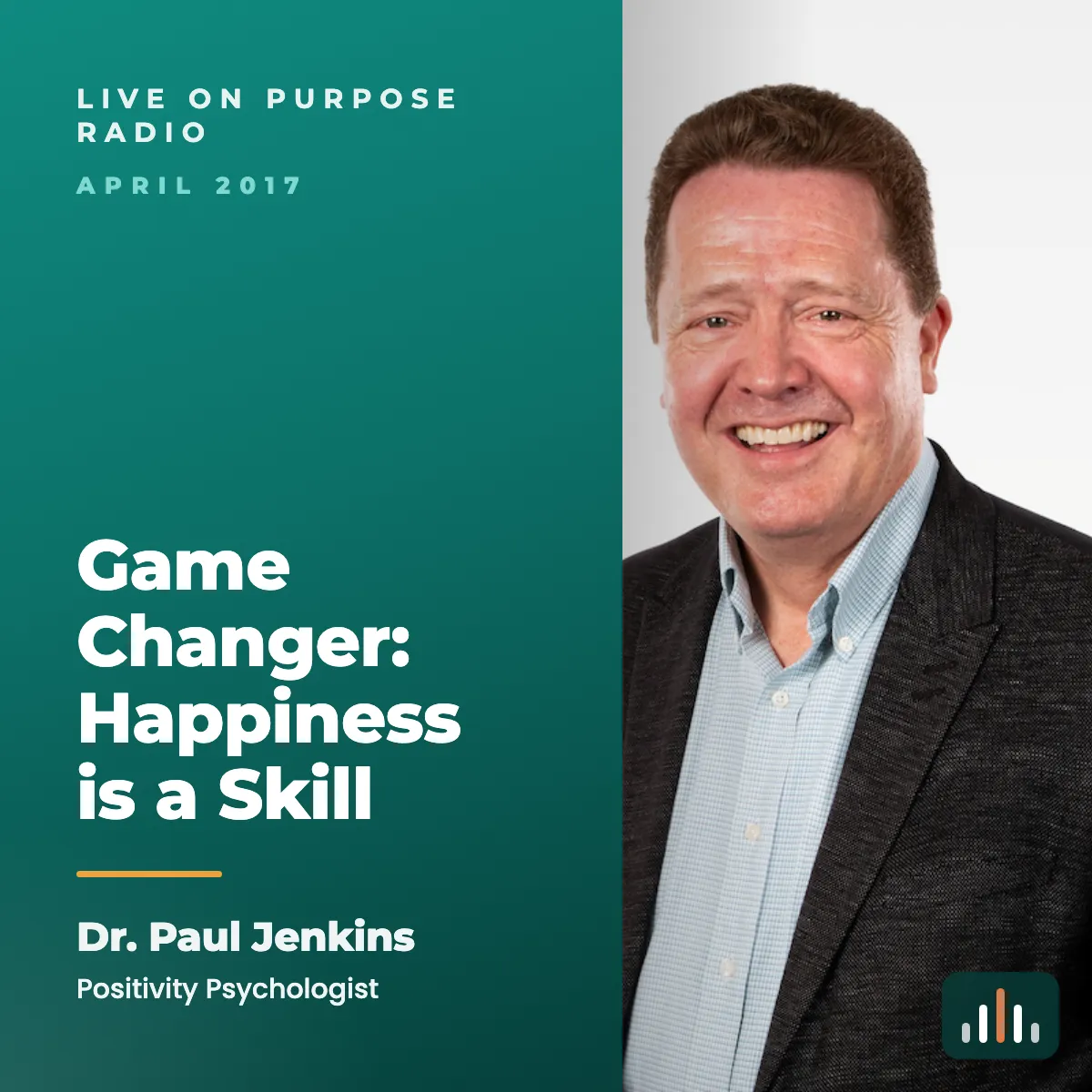
Welcome to Live On Purpose Radio with doctor Paul Jenkins, where you will hear inspiring stories of ordinary people doing extraordinary things. Feed your mind with a regular dose of positive energy and show up for your life every day on purpose. Living on purpose means that you have a purpose and you do it intentionally. And now, here's your host, doctor Paul. Hello, everybody.
Welcome back to Live On Purpose Radio. This is doctor Paul, the shrink, who expands your life with another episode of Live On Purpose Radio. Folks, we have a returning guest. A repeat offender. A repeat offender.
Is that what we're gonna call you, Scott? Yeah. Yeah. That's the right way to go. This doesn't happen a lot at Live On Purpose Radio because of the abundance of amazing people that are out there to interview, and I've got two lined up for tomorrow.
Scott, I invited you back on purpose. And folks, this is Scott Wilhite. You might be thinking, which Scott? You've heard the ads at Live On Purpose Radio for Feed Your Happy, which is an app that Scott developed. And since then, Scott, you came out with your book Mhmm.
Which is called the seven core skills for everyday happiness. Did I get the title right? Pretty close. The Seven Core Skills of Everyday Happiness. Of, not four.
Yeah. Of. There you go. That's important. Yep.
You'll find it either way because it's a best seller on Amazon. This book has been out... At the time of our recording, it's been out for a couple of months, I think. Yeah. It came out in December, and right now it's February.
So we're gonna jump right in because the reason I invited you back is because your book and the ideas that you presented in that book have changed the way that I practice psychology and the way that I talk to my clients. I love to hear this. Thank you so much. And it's a good thing. Here's here's the, where we'll start, I guess.
I have taught people forever that happiness is a choice. Uh-huh. And we all know that. I mean, you ask anybody and they'll be like, oh, yeah. Yeah.
You know? They know that happiness is joy. But they have a hard time actually experiencing it sometimes. Oh, because it's frustrating if you look at it that that way sometimes. It can be.
And and almost, some people get defensive because it feels accusatory. If somebody says happiness is a choice, but I'm not happy, then you're accusing me of choosing to be miserable. Yeah. Or you can be frustrated the other way, which is what happened to me. You know, my background is I'm a filmmaker.
And for years, for a decade, I was seeking happiness. But in everything that I was choosing, you know, all these things that I thought would make me happy, all these external things Right. Just left me more and more empty and more and more frustrated because I'm choosing happiness every day, but I wasn't, you know? Darn it. Yeah.
I I was get... I was caught up in the myths, you know? And Yeah. And it just it... I just spiraled down.
And and the harder I worked at it, the more frustrated, tangled in this mess I became until I learned that idea that happiness was a skill. And suddenly, you know, that just opened the world to me because with a skill, that means there's something you can do about it. You can always get better at a skill. That immediately changes the game. It does.
Think about it, folks. As you're listening to me and Scott have this conversation today, think for a moment, happiness is a choice. Okay? Just check out how that feels. Yeah.
How you're doing with that. Now think for a moment, happiness is a skill. What changed? That's fun, isn't it? Isn't it fun just to just think that way?
You know what? It totally changes the game. When I share this with my clients, they feel relieved because they realize, okay, I've been choosing happiness all along. It's a skill that implies some things that the choice doesn't. Yeah.
So what does it imply? What does that bring to mind for you, Scott? Well, you know what? It was interesting when I first kinda came up with this idea that happiness was a was a skill. Mhmm.
I was reading, a lot of these books on research on positive psychology, and it was amazing. You know, my mind was just being open to it. Right. But I remember reading, and I don't remember who the researcher was, guy or girl, but they were talking about that you can't... They were talking about the the, the effect of gratitude on your life and and all these all these research on it.
But they said something interesting. They said you can't be grateful and unhappy at the same time. And I thought, oh, that is really interesting. That means that if I am not happy right now, if I get grateful, then I can get happy. If I'm sort of happy right now and I increase my gratitude levels, that means that I can therefore increase my happiness levels.
It's all up to me, and it's all on how good I am at being genuinely, deliberately, authentically grateful. And suddenly, that idea, happiness is a skill, just poof. You know, that came to mind. And there was something I could do now. And and it was tangible.
It was... You know, I could focus on this one thing. And, and suddenly, I was no longer stuck. I was no longer trapped, which is how I felt for all these years. You know?
I was just... The harder the harder I worked at trying to, you know, find something in my life that would satisfy me, just the the more frustrated I became. But now that I learned that it was, like, as simple as gratitude, and it was a skill enough. I used it that way. Now it was just how how willing am I to work on and stretch that skill?
Right. So it implies that you get to work on something or you get to put a process in place that allows you to develop or grow a particular skill or skill set as the case may be. Yeah. And I think happiness is probably a skill set. Yes.
Yeah. There's many components to it. One of which is to focus on gratitude. Mhmm. You know the interesting thing about gratitude, and my model supports this, the the portable positivity model that many of the listeners are are familiar with, That no matter what...
Think about this for a moment. No matter what is going on in your life, you can find a way to be grateful. Mhmm. Is that true? It's true.
There is always, always, always, always something to be grateful for. And and and I do wanna explain gratitude just a little bit before we get a little too far because I used to think thankfulness was gratitude, and it's really different. Because actually with... With thankfulness, you can... I can.
I was really good at this. I... You can turn that into a negative because you can... I used to do this all the time. I used to take, thankfulness as indebtedness.
You know? I had a guy down the street. I don't have a truck. Oh, that's interesting. Move a washing machine.
And so I had to borrow his truck, and he was kind enough to lend me his truck. Well, when I I thanked him profusely for it, I filled up his truck afterwards with gas to show how thankful I was, but I was not thankful. I felt indebted. I felt inferior. This is...
Again, this is my choice and my mindset. But if you look at gratitude and what gratitude really is, it is realizing you are the recipient of deliberate kindness. So if I was in a state of gratitude, I would have said, oh, my friend cares about me enough to lend me his truck. He... He's doing...
You know? And and as I look at it and as I appreciate him and his act of kindness Mhmm. And appreciate that he did this deliberately, then I can feel gratitude for him and his kindness rather than taking it from a a mindset of scarcity. You know, this this mindset of lack Mhmm. Which then can turn a a positive thing of being thankful into a negative thing of indebtedness.
Does that make sense to you? Which feels totally different. Oh, totally. Yeah. So suddenly this thing is making great.
Making that distinction, Scott, that... And you've you've chosen to assign this thankful word to that state that we have when, yes, we're thankful. We're we're glad that that was available to us, but now we feel somehow indebted or obliged or less than. Well, you can. You can take it that way.
And so that's the beauty of gratitude is when you when you understand you're the recipient of deliberate kindness, and it could be from another person, it could be from the universe, you know, it could be from God, it can be, you know, from whatever. But you you realize that connection. Suddenly, it gives you a little bit more to go on to be to be grateful for because now you're connected to someone else or something else. And, and and it's outside of you. And it's something that has benefited and blessed your life in in amazing ways.
So I made a bold statement earlier when I said no matter what. Yeah. I keep thinking of what my friend Elizabeth Smart shared with me. She was on the show a couple of years ago. And she said that no matter how bad things get...
K? And some of our listeners will remember her story. She was abducted and raped every day for nine months at the age of 14. What? I mean, what's going on in your life, you know, that you can compare to that?
But she said, no matter what's going on, no matter how bad things seem, we can always be grateful. And that thought, I think, saved her life. And she may have even said that when I interviewed her, but, wow. That brings some perspective to it. So we can look at whatever it is that's going on in our life.
You can always imagine something worse, and that's where it ties into my model. Mhmm. Compared to something worse, this looks pretty good. Compared to something better, this doesn't look so good. Well, do you have any choice?
Yeah. And I love what you're saying right here. You were talking about using comparison as a skill. And I love that. Right.
Because so many people... You know, I love, Teddy Roosevelt said, comparison is the thief of joy, which I believe. Yeah. But that is when we just do it naturally and instinctively, and, generally, that's from a position of lack or scarcity. And we compare, you know, like, our middle or our beginning to someone else's middle or something like that.
But what you were talking about is being purposeful, deliberate about, about using, comparison to set things right, to get your mindset right, and get your focus right. And even the word right sometimes creates a little bit of pressure. Mhmm. What if it's just one of the options? Yeah.
So we're not trying to get it right so much as I'm choosing a position that serves me well. Yeah. Healthy or constructive, I think, are better options for that. Here's another example, Scott. I was just, going over this with a client earlier today before you showed up at the office.
I'm right on schedule. Uh-huh. K. Think about that for a minute and how that thought feels. I'm right on schedule.
Yep. K. As opposed to, I'm behind. Yeah. K.
Do you notice the difference? Oh, yeah. Yeah. The difference is caused by little squirts of chemist... Chemicals...
Chemistry into your central nervous system in your bloodstream, and it's caused by a thought. Now let me ask you this. Do you know for sure that you are right on schedule? Do I know for sure? I don't.
Not really. Yeah. Do you know for sure that you're not? Well, no. I can't prove that either.
So pick a position. And and I love this concept of skill because you can develop a a skill of choosing one position or the other on purpose, habitually, consistently. And what if you started to consistently think that you're right on schedule? Mhmm. And really train and practice that.
You know, I do have to thank you. You you wrote, an Amazon review for me. I so appreciated it. Oh, yeah. And it was so eloquently worded.
You you talked about, you know, piano skills and, Right. And said that, you know, that that happiness is like piano skills. We don't go looking for them. You know? Stop looking.
Start developing. Start working on them. You know? That it is something that you can do every day. You know?
And that is just... I mean, that was just so well worded, and I so appreciated that. I think we'll develop that thought a little bit more as we come back from our break. Okay. Folks, this is Scott Wilhite at Live On Purpose Radio.
We'll be right back. You all know that I'm excited about positive psychology. Finally, there is an app that is available to help you feed your happy. My friend Scott Wilhite developed this app. Scott, tell us about it.
Well, it's called Feed Your Happy. It's like seven habits meets the Fitbit, where you get mental training on seven core skills to happiness and you get the tracking ability too so that you can chart. Anything you chart improves faster. If you like apps, if you like games, if you like happy, this is it. Feed Your Happy.
It's available now in the App Store. And we're back. Scott Wilhite at Live On Purpose Radio today. Again. Again.
The repeat offender. Scott, when your book came out, you very graciously sent me a review copies. We've been friends for a while, and and you reached out to some of your friends to get some feedback. Mhmm. When I read that, it clicked immediately with me.
And folks, seriously, seriously, this book adds something significant to the conversation, which is why you became a best seller on Amazon within two days of launching the darn thing. Oh, that was fun. Is that crazy? Does that just blow your mind? Oh, that was really cool.
Important game changing ideas do this, and this is one of those. So it occurred to me as I was reading your book, you mentioned my review. And it wasn't hard to write because it occurred to me immediately. I play the piano. K?
I... Sometimes when I play the piano, people gather it around listening, say things like, oh, I wish I could play like that. Yeah. Right? Yeah.
Is it a wish thing? So let me ask you this. Is piano a choice? Well, yes and no. It's a choice if you will choose to practice and do something about it.
But if you haven't done that, then it's not really an option sometimes. So notice that the choice element is essential but not sufficient. Yeah. That is so obviously painfully clear when we're talking about the piano. Yeah.
When we switch over to happiness, it's like, well, I should just be able to choose it. Well, yes. The choice is essential but not sufficient. So then there's a process of building the skills that are necessary. And they're not hard.
Yeah. And that's kind of the the funny thing is it's this... It's these little tiny things, but added up over time and time and time and and, you know, repetition and things like any skill. You know, if you wanna learn to dribble a basketball between your legs, it's not that hard if you give it a few minutes every day. You know?
Well, we hear about people all the time who are looking for their happiness. Yeah. Right? Do you ever hear of anyone looking for their piano skills? And you know what?
It was funny because about a month or so before your book came out Mhmm. I hired a guitar teacher. I've never touched the guitar. I've I've got musical skills. I know how to play the piano.
Piano skills and guitar skills are not the same thing. No. There's some overlap. Mhmm. You know, like reading music and understanding theory and things like that.
But there's not a direct correlation. You can't just pick up a guitar if you're a pianist. So I wanted to learn how to play the guitar. So I hired a guitar teacher. Folks, we're laying out a pattern here.
Okay? Pay attention here. This is very important. Take take a note. I hired a teacher.
This teacher taught me some very basic skills. They weren't the ones that I wanted. I wanted to be able to, you know, jam on a song I learned in high school or something. Well, that's not what he handed me at first. He's like, this is a guitar.
This is the e string. This... You know? And I'm like, okay. Let's get to the fun stuff.
You gotta master the basics first. Right? And then I had to take the darn thing home and and practice. That p word. I gotta tell you, my guitar instructor is so brilliant.
He can tell if I haven't practiced. Does that just blow your mind, Scott? No. It's, very clear. I have kids that are playing the piano, and and when they...
You know, we always know when they practice or don't. You can tell. You can tell. And they're not they're not hard things like you said. So so bring us back to happiness.
I've... I was happy to write that review for you, and it just occurred to me that it's just like music skills in a different area of our life. Yeah. If we look at it that way, we approach it differently. And really, doctor Paul, you worded that so eloquently.
I butchered it when I was paraphrasing it. If you wanna read it, go to the Amazon, go to go to the page on Amazon and read it. It's really great. But, yeah, the the idea that happiness is a skill, and it's something you can work on, and it really just takes a few minutes each day. If you will dedicate...
And I love this. If I can get people to commit to working on their mind, giving themselves ten minutes of self time every day... Wait. Ten? Ten.
Ten minutes. Just ten minutes. Yeah. If you will work for ten minutes a day on yourself, getting your mindset healthy, getting... You know, focusing on the right things, holy cow, you can change your life.
And, you know, and and you think what... I mean, if you played the piano or the guitar for ten minutes every day, you're gonna improve. Right? Yeah. I mean, if you play for twenty, you're gonna get even better.
But it's amazing how much you can do with just... With your mind with just ten minutes a day. Another thing that I love about your model, Scott, when when you look at it as a skill and you realize that practice will be necessary, when you start to practice a new skill, it doesn't feel natural. Yeah. Can you talk about that for a minute and your own experience with that?
Well, you know what is interesting about this is that when you practice these skills, the skills of happiness, they're fun. They're not, and and some of them are a little bit more challenging, of course, you know, because you're stretching. You're getting outside of yourself. We live often in these worlds of comfort that we've... You know, cocoons that we've built around ourselves where we're afraid to interact with other people.
But as we get over that, you know, then there's great growth and things. But, the skills can be so simple. You know, skills of, we talked a little bit about gratitude. We talked, you know, the the second skill is to savor the now, to live in the moment, to live in the present, to not be rushing so quickly to the next moment, or living in the past and, beating ourselves up over, you know, past grievances and things or, you know, not forgiving other people. You know, all that kinda ties into that.
There's skills of awe in there that you could talk about that, you know, you can work on. All these things, they're amazing. They're simple. They're clear. And and as you think about them, you think, well, that's just common sense.
Yeah. But common sense is not always common practice. That common. You know? And Right.
And it... But as you start to do these things, then you start to feel the benefit that comes from it. And it's it's just so kind of immediate that you realize this really works. This really helps. I I don't have to be a victim of my mindset.
I don't have to be a victim of my circumstances. And if I do these things, I can start to spiral up. With with your own experience, with the clients you've worked with, with people who have used your app, what are you hearing? How long does it take to experience some kind of a meaningful difference in your overall happiness level? What what would you say?
You know, from my experience, from... For me, it took about a week to ten days. Okay. When I when I first started that, that was the thing that really blew my mind. The...
You know, that... Now we're not talking about just just feeling better in the moment. We're talking about a more sustained level of happiness. Is that true? Well, yes and no.
Okay. For me, it was about a week to ten days for me to really transform my life, to really understand, holy cow, I'm in charge of this. And The lights went on. The lights went on. And suddenly, you know, how I felt inside was completely different, which was amazing.
And I took off, and it was really cool temporarily. And then I started drifting back into my old ways of thinking. You know? And that's where I realized, okay. Yeah.
Happiness is a skill. And like any skill, it needs repetition and consistency to really build that. And so that's when I started putting these systems into place that helped transform my life, and it has made it much more sustainable. But with other clients, like, I love... I've gotten two emails recently from, two different women with postpartum depression, and they were saying thank you for this.
They once said, I saw a Facebook live that you did, and you talked about how to write down three fortunate things every single day. You know, three fortunate things that happened to you. And and I was in such a bad place, but I said, well, it couldn't hurt. And she did that. She started doing that, and she...
That was... Anyway, I don't know how long it took her, but, but that Facebook live was... Anyway, that was, like, two months ago. But she's talked about how that has really changed her. The other one talked about how it was a life saving thing for her because she also was caught with postpartum depression.
And she started... She had read the book, and she said just the systems in there and the ideas in there. Doing that on a consistent basis had had re... Kinda rewired her mind, you know, what she was focused on and how reactive she was to her children. And so, you know, for them, it was just such an amazing experience.
But they did it themselves. You know? Yes. It... Simple.
Yes. Simple and even easy. A lot of times, I make the distinction that simple is not the same thing as easy. And a lot of times, it's not. Simple things can be very difficult to implement.
I think the hardest thing about this is actually just experiencing the resistance when you try something new. And the the way the the way to be consistent about this. Because your biggest problem is gonna be human nature. You know? It's so easy to just slip into same old, same old.
For me, it was so easy to slip into my old negative mindset. But we get into these lazy patterns. But if we can... And and that's why I think there's just beauty in setting a time every day that you will work on you... Self time.
You know? Ten minutes that you're gonna work on yourself, and it's the same time every day, and you you dedicate that to yourself like you would dedicate it to your best friend. And if you treat yourself like that best friend, and you work on that, and you give yourself this time, and you develop a new skill every day. Maybe one day it's gratitude, maybe another day it's on relationships, or, you know, another day it's about detoxing and getting rid of stress. But if you work on this for ten minutes, holy cow, you know, suddenly you'll have all these different skills.
So when life throws what life likes to throw at you, it's not gonna throw you like it used to. I just had a weird idea. Yeah. You can toss this out if you want, Scott. But this is so important and so essential to our joy and our happiness.
What if you were to do this instead of brushing your teeth? Now I'm...... A great idea. Now I'm being absolutely serious about this because that's something that you've already programmed into your day. Yeah.
So instead of brushing your teeth, work on brushing your mind, and find a different time to brush your teeth. Brush your teeth right after you do this. Do you see what I'm saying? Just hook it onto something that's already programmed in because this is the best thing that you can do for your happiness. And that's going to fuel every other measurable success measure that that we've ever come up with.
Sean Acor pointed pointed this out. He said, you know, we've we've known forever that, happiness and success are correlated, but we got it backwards and thought, therefore, if we're successful, we'll be happy. Yeah. It's the other way around. Exactly.
Your happiness will determine your success. In fact, that's how we measure it. Because if you're happy, what else is there? Yeah. Reverse engineering.
Because we always think that happiness is the end too. Mhmm. That if I work hard, I will be successful. And if I'm successful, I will be happy. Right.
Well, you know, if you start with happiness, if you start with the things that will genuinely, authentically make you happy, help you... And and I shouldn't say make you happy, but produce, you know... As as you develop that skill set Mhmm. Then... And and then you you are authentically, genuinely happy, then everything else clicks into place and gets easier too.
Right. So swap it out for tooth brushing. And I know my dentist friends are gonna get on me about that. But you know what? Find another time to brush your teeth.
Yeah. But just imagine, I mean, you were so programmed to brush your teeth. You do that every day, and you are not gonna miss a day of brushing your teeth. It's not like you forget. And if you do, there's a reminder.
Yeah. Yeah. I can feel it right now. But, yeah, if you gave yourself that time to yourself to get your mindset in a healthy state, holy cow. Your day would be great.
Scott, you brought it again. That's why you're a repeat offender. Well, thank you. And thank you for inviting me. I sure appreciate it, doctor Paul.
Always an honor to hang out with you. And this is this is fun because I think together with the kinds of ideas we're talking about here, lives change. Lives are saved. This is important stuff. Folks, you wanna connect with Scott.
K? We've already introduced you to feed your happy Yep. Which is available in the App Store. Yep. IPhone, if you have that.
The website, encourage.life..life. It's the letter n, the word courage, so it's encourage spelled a little weird, .life, which is a different domain name, but, hey, that's what we're all about. Encouraging the best animal. Not interested in the same. Yeah.
We want something different. So encourage.life, what are they gonna find there, Scott? You'll find links to the app. You'll find, information about the book. You will find, you'll find out about my twelve week system where, you know, where we'll help you have a made for you system so that you don't have to think about, oh, what am I gonna do for my ten minutes?
You know, we'll have stuff for you if you'd like that. And then, also, you can get absolutely free my three mindsets of success that will help you kinda see where you've had some limiting beliefs that have been holding you back, how to get rid of those, and how to get yourself into the state of mind for tremendous growth. Wonderful. Thank you, Scott. Oh, thank you.
It's a game changer, folks. Happiness is a skill. Let's start spreading that little truth around because it's gonna change some lives and probably some lives of people that you love. So that... What could be more important than that?
What do you wanna finish with today, Scott? Oh, I just so appreciate you inviting me. And I hope that as you've been listening, as you as you've been kind of, you know, paying attention and thinking, should I really do this? If you will give yourself... I mean, challenge yourself.
Give yourself a week. You know, give yourself ten days where you are going to give yourself ten minutes each day to get yourself in a good state of mind, you know, to focus on what's going right in your life. And there are a lot of different ideas and activities that you can find on my website. But if you will do that and dedicate that time to yourself, you will find just amazing things start to happen. And it just really happens through your focus.
So I hope that you do that. I hope you you care about yourself enough to try it. Commit to do it. The website is n,thelettern,courage.life. This has been Scott Will Hite at Live On Purpose Radio.
It's time, everybody, to go out there and live on purpose.
Open the transcript on its own page ↗