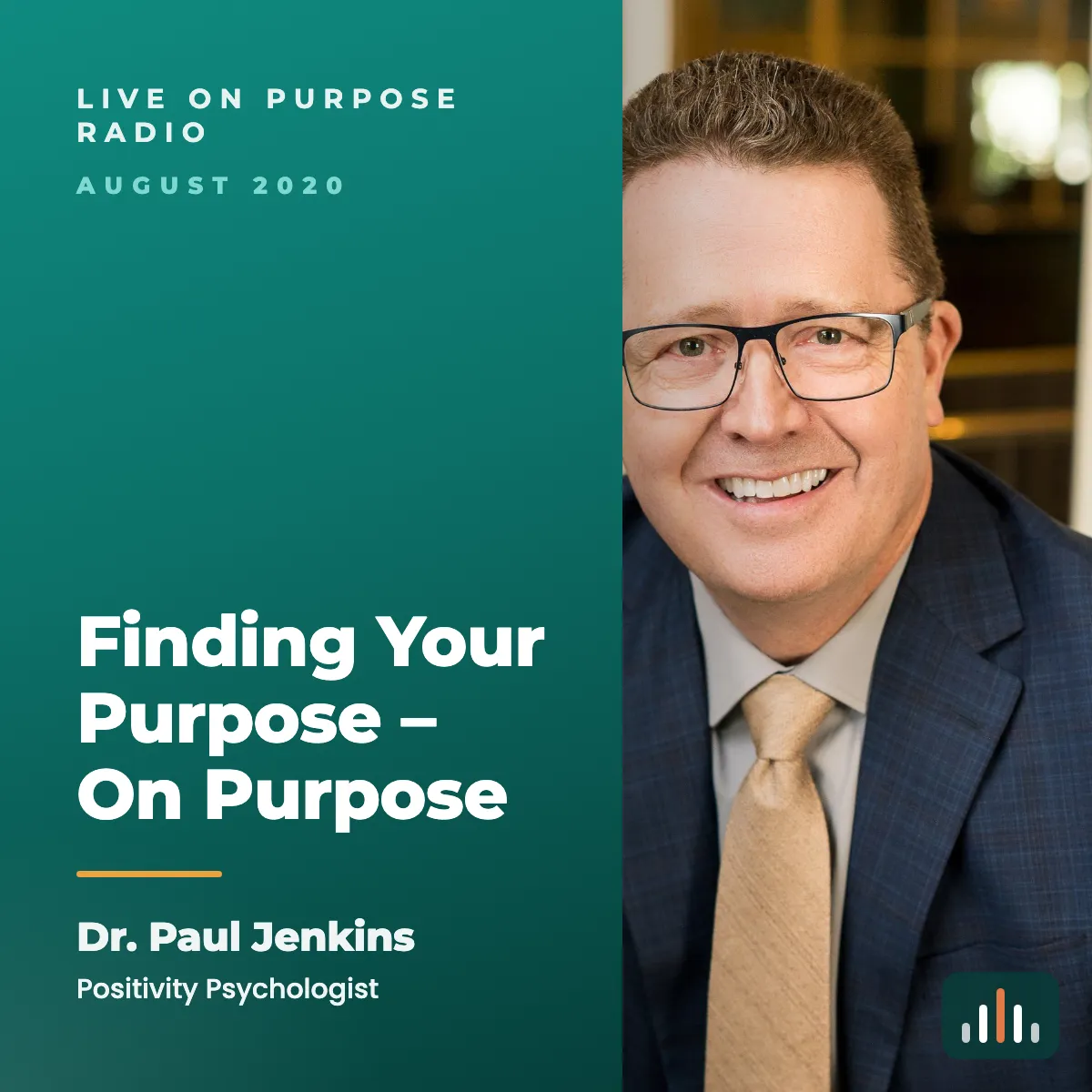
Welcome to Live on Purpose Radio with doctor Paul Jenkins, where you will hear inspiring stories of ordinary people doing And now, here's your host, doctor Paul. And now here's your host, doctor Paul. Hello, everybody, and welcome back to Live on Purpose Radio. This is doctor Paul, the shrink, who expands your life with another episode of Live on Purpose Radio. Joining me today is Misty Sansom.
Misty's a writer. She's a life purpose coach. She helps people figure out exactly what they're meant to do in life and connect to that on purpose. Misty, I am thrilled to have you join me today at Live on Purpose Radio. Welcome.
Thank you so much for having me. I'm really excited to be chatting with you, especially about this topic. This topic is one of my favorites. Yeah. Me too.
You know, anytime we get focused on purpose... Obviously, the name of the show is Live on Purpose Radio. Right? Mhmm. Anytime we get focused on purpose, I think it helps us to reconnect to principles that allow us to really move forward in our life and have the outcomes that we're hoping to get.
You've been doing some work along these lines. You've got an ebook. You do a monthly membership. You've got coaching that you offer. Will you back us up just a little bit and share with us a little bit about your story?
What is it that has created this opportunity for you? Where are you coming from, and why are you so excited about purpose? Yeah. Absolutely. Great question.
So, my... I... I'm from New Zealand, if you pick up an accent there. And right from a very young age, I've always felt like there was something that I was meant to do. Like it was a very strong pull and I find, a lot of my clients and people that I work with or people in my audience have that similar, very same kind of feeling about feeling compelled.
There's something that they're meant to do, but just not being able to articulate exactly what it is. And so I went through that process. I had that feeling, throughout my early years in life and I would, I really wanted to do this thing that I felt compelled to do, but just had no idea what it was. And so I would sort of try and figure it out and think, well, maybe, you know, I'm really interested in this. And I fell into the, the issue that so many of us do.
I took the advice that so many of us hear about following your passions. And so I would follow a passion and run down this path with it, but inevitably I would get to a point where I just realized it's just not quite right. Something still felt missing. It just didn't feel how I thought it would. And I would go back to square one and think, oh, well, you know, I'm really interested in this.
Maybe this is my purpose. And I would run down this path. And I did that over and over several times over. And, I eventually got to a point where I realized that my passions aren't my purpose, that my purpose is something bigger than that. And I was still needing to, nail down exactly what it was.
So after, you know, a few different careers and a few different paths, I'm trying to figure out what it was. I decided that I'm just going to devote, you know, however long it took to figure out exactly what this thing was, because I thought I'm just going to drive myself mad if I don't work this out. So I still was, you know, very much in normal, normal everyday life. I had a job, I was, you know, doing normal things, but in the back of my mind, in my spare time, I was really diving into uncovering what is my purpose? What am I here to do?
And then how would I make that happen? So it took a lot of, personal reflection and personal growth, and I was doing lots of different, trying to sort of really uncover who I was and what I was about and what I was here to do. And it took, several months of actively focusing on it, as well as all the years previous. And I remember, you know, one night I was lying in bed, it was dark and I was thinking about it in the back of my mind, like, you know, what is it like? What am I, what am I meant to do in this lifetime?
And I kind of almost heard these words spoken to me, your purpose is to help others find theirs. And it was just like a light switch on and, you know, sort of a whole body sigh of relief, like, oh my gosh, this is, this is it. And it felt amazing for about thirty seconds. And then I thought, wait, what does that even mean? Like, that's not a thing, you know, what am I meant to do with that?
And I sort of thought, no, no, that's silly. I want like a job or I want an occupation or, you know, I want a topic that I can study, like your purpose is to be a lawyer or, you know, something like that. So I thought, no, no, no, that's too, too vague. And I tried to go back to the drawing board again, but you can't unknow what you know. And so after, you know, maybe sort of a few weeks, I thought, right, I, I have, I, I'm going to accept this.
I'm not going to fight against it because I know that that's what I'm meant to do. And instead I will work out, how I can turn it into something. Like, what do I do with that and how can I make it a thing? And, yeah, that essentially, leads to where I am today. I looked back over particularly those, several months and the years before that and sort of thought, what would have helped me if I'd known this?
What would have made the journey easier and faster? And how did I figure it out? Like, what were the things that, really moved the needle for me? And so I suppose in a way I kind of reverse engineered the process that I went through and made it very simple, very logical. I think when you're dealing with something so intangible like purpose, you need a logical process to follow.
And that's the process that I use still today with clients and and eBooks. And I take them through this, process that means that someone can go from having no idea what their purpose is to knowing exactly what their purpose is and having these different options of how to bring it to life in, you know, sometimes four weeks, three to four weeks. Wow. It's quite a journey, isn't it? Yeah, it is.
It is a journey and it's a very, it's a big, personal growth, personal development journey. It's often a spiritual journey if you're that way inclined as well. It's a, it's a huge learning and, and unlearning, you know, sort of, shifting the, misconceptions that you might have about purpose and what that means, or, you know, what it means to live or even about yourself as a person and your personality and how you work and how society works. So it's a, it is a, it's a big process. You know, it struck me as you were sharing your story, Misty, that you you mentioned normal life.
Yeah. As if, you know, there's something out there that is normal and anything that starts from that. But it... The thing that I've noticed, maybe you've seen this too in your work, your purpose is not necessarily what we would call normal. So...
I would totally agree with that. Well... And sometimes I've I've seen this as well. When we get closer to it or when we identify what it is, there's this almost elated feeling of, oh, I was hoping it was that. Yeah.
Even though, as you said, it's not really a thing. It's not part of normal life, but it can become part of your normal as you get clear about what your purpose is. And I see that you've done that through your journey. Yeah. And I I I totally agree with what you're saying.
I I see purpose as more, the sort of overarching theme of your life and it's a much higher level concept. And often when people go through the process, they realize, you know, your purpose is very vague and it's going to be very, this very high level concept, but something very simple as well. And there's not going to be a clear way of, you know, how you bring it to life or there's not going to be a clear occupation that's going to come out of it, which is a good thing. And then when you get to the point of, you know, how do I bring my purpose to life or how do I live it in everyday life? That's where you bring in your passions and your skills and your experience and how you want to live and what you want to do.
And you go through all the very many, many different options of how you could bring this singular purpose to life. And that, I think that's really exciting as well. And I, I find that, people are reassured, with the knowledge that, you know, they have one purpose that is going to stay the same throughout their life. It's a purpose I've always had, but the way in which they bring it to life can change as their life changes, which is totally fine. You know, you can do different things throughout your life.
You can bring it to life in different ways over time, and that's totally normal, totally fine. So it's this, it's a sort of feeling of having a very clear north star, but still having the flexibility to change. And, you know, you go through life and you might have a family or, move in and out of relationships or change careers or change countries or whatever that is. Sure. And it's just nice to know that no matter how life changes around you, you still have this, North star to move toward.
Which then can become an influencing factor in all of those other decisions that you make because you become a part of the purpose. I love that. So, Misty, as as we get into, the second part of our our conversation today, I usually like to get into the practicality. Now you said you said earlier that there are some processes that you've identified. You kind of reverse engineered your own experience because your purpose is to help other people find theirs.
Yeah. Yeah. Absolutely. And I I would love to, you know, walk you through the process that I take people through today, that that I take people through now. So, yeah, more than happy to, jump into that.
I love that. Let's get into that as we come back from this first break. Folks, this is Misty Sansom at Live on Purpose Radio, and we'll be right back. Are you ready to take your positivity to a whole new level? I've been enjoying these conversations with my guests at Live On Purpose Radio.
My own story about becoming more positive is something that I've shared in my book, Pathological positivity. And right now, I'm giving the book away. You just pay for the shipping. Go to doctor paul jenkins dot com, spelled with a d r, and click on the big orange button right there that will get you a free copy of my book. You pay the shipping, I'll pay for the book.
Sound like a good deal? Power up your positivity and get ready to see phenomenal changes in your happiness, your relationships, your business, every aspect of life. Enjoy this free gift from me, doctorpauljenkins.com. And we're back. Misty Sansa, I'm at Live On Purpose Radio today.
Misty, we're talking about purpose. And Perfect. Obviously, you know, this is this is such a core element. Because like you said in the first half, once you're clear about your purpose, that becomes kind of a North Star, a a guiding standard for you as you make all other decisions in your life. Is is this consistent with my purpose or is it not?
Yeah. Absolutely. It's it's so good to have that, clarity and, you know, clarity gives you confidence as well. You... Once you have that clarity, you feel confident that you are heading in the right direction.
You know, whatever direction you take, whatever path you take, I should say, you have that confidence that I I know what it is I'm working toward. I know what it is that's, guiding me. Right. So identifying that purpose becomes very, very important. And like you said earlier, you've come up with some strategies around doing that because you you were able to find yours.
Now it took a while. It was a bit of a journey for you to get there. You found some ways to to shortcut that process. And I I don't wanna minimize it by saying shortcut. I mean, you've learned some things from your experience that can help other people to get there a little faster or more efficiently.
Yeah. Absolutely. I'm all about, making the intangible very tangible and very logical and and making it very clear. I think, you know, these concepts are... And like myself, I...
These concepts are things that you can spend a lifetime searching for. And I I really do want to shortcut that process for people. I I want to make it, much easier so that people, can figure it out very quickly and, then move into the most important phase, which is actually bringing your purpose to life and living it on a day to day basis. So the process of, finding your purpose, I would love to, you know, walk you through that now if that's okay with you. Oh, that would be fantastic.
Yes. Yeah. Perfect. Okay. Great.
So the place to start essentially, you need to know, very deeply who you are and what you're about. So I always start with people, with understanding their personality, their strengths and weaknesses and likes and dislikes and what makes them tick and, you know, what motivates them. And this understanding who you are at that level is an ongoing process. Right? We all, we grow and change as time goes on, which is perfect, but you can very quickly get up to speed with, who you are now.
And the way that I like to do that is through a Myers Briggs, based personality test. Oh. I use, I don't know if that's something that you're a fan of, but, I use, 16 personalities and I know, you know, personality tests obviously have a lot of criticism. And they, it's a stretch to say that everyone fits in these sort of 16 boxes. But, I find if just taking it as a very quick overview to give you some insights that you may not have considered or, seeing aspects in your...
Of your personality in a different light is really helpful. So it's sort of a... I I always give a little disclaimer with it. But And I'm glad you added the disclaimer, Misty, not because I'm against anything like that. I think they're really useful tools When we see them as just that, they're tools.
This isn't the answer to life, the universe, and everything. It's not some kind of a crystal ball that tells you things you didn't already know about yourself. It... It's a way for for you to start honing in on some of the characteristics that are going to help you understand what your purpose is. That's exactly it.
Yeah. That is exactly it. And, yeah, I always wanna reassure people that it's... You you know, you somewhat take it with a grain of salt. But at the same time, it's just, it's a very quick, very simple and very fun way to just get that, insight that you may not have considered.
And, you know, we all fall into the trap of thinking that, the way that we think is a sort of a standard way of thinking, or we kind of, we think that certain aspects of our personality, are things that everyone has or everyone shares. And it's, it's just nice to highlight those differences and think, actually, you might be a little bit different in how you approach these things. So, that's a place that I like to start with. The one that I recommend people to take is free. You don't need to register.
It's a very in-depth profile. And I also like how they give a percentage of each trait. So rather than saying you are introverted or you're extroverted, it's really interesting to see, you know, where you kind of fall on that scale because I think that that gives you a lot of information as well. So I would start with, a process like that, and then we would go through a series of different prompts just to, dive a little deeper into it and sort of explore, the different insights that have come up and, and are there, are there aspects of your personality that you may see in a different light and, and what does that mean? And, you know, what parts resonate with you?
What parts don't? And just getting people to start that process of self reflection, that really deep process. So we move through that and then we get into, how you like to feel like, how do you like to feel in day to day life? Like, do you like to feel safe or do you like to feel nurtured or nurturing or, you know, do you like to feel excited or free or whatever those feelings are? So I would get people to, make a long list of all the different ways that they like to feel in life and then narrow those down to the sort of top three to five, most significant or most important ones.
And that's really important going forward, because without being consciously aware of that, we're, you know, we're all guilty of this at times, I've done this, absolutely done this before, we can fall into a life that doesn't make us feel how we want to feel. You know, we can fall into a life that creates these feelings that are in total conflict with how we want to feel. And often that comes up in a career, you know, we, so many of us do just kind of fall into a job, or fall into a career. And sometimes we are in a situation where we just, you know, we have to take what's there, which is totally fine, nothing wrong with that. But, if you are feeling really dissatisfied with your life, going through that process of how do you want to to feel is really important because you might see that, you know, I'm a person who wants to feel free, whereas I've created a life that I'm very, sort of restricted in what I can do, or, you know, my time is very restricted or I can't be flexible with how I work.
So that's, yeah, important process to go through. So we'd work through that. And then we get into, your themes, which, your passions and interests. And I like to split them into intangible themes, like a love of learning or a tangible theme, like a love of design, for example. And we can sort of go through and just...
And this is always a fun exercise because it's just you writing down everything you love on a piece of paper and, you know, going over the things that you've always loved doing, you've always been drawn to, or the different skills that you want to pick up even, that's really interesting to see those written down. And so usually again, we can narrow that down and there will be sort of three to five really core themes that you've always come back to, where you always find yourself being drawn to throughout your life. We look at what motivates you. So for example, if we uncover, an intangible theme of, connecting with people, we would go right into that and sort of say, what what is it that you love about this? Like, how would you describe it?
Because someone might describe, for instance, a love of nature as being, you know, very connected with elements and someone else might describe it as being very, sort of isolated in a good way, you know, having that solitude and that peace and someone else might describe it as, you know, feeling really alive with, you know, the wildlife around. And so it's interesting to hear why people are drawn to those particular themes. And if you kind of go a bit deeper and say, what is it about, you know, that feeling of solitude that is so important for you? And usually we would get back to those core feelings. Like, you know, I want to feel at peace or I want to feel calm.
It might, it's usually something like that, which is great. It reinforces that, yeah, you're on the right track. And then the last part of the section is to uncover your values. And so same process, you would, you know, go through a series of prompts and you would identify the more significant values in your life and narrow them down to, the top few. And that's a really interesting process because again, we often can find ourselves in a situation where we're living in such a way that is in direct conflict with these values that we weren't consciously aware we had, you know, and it's, again, it often comes from a career that it sort of might be a job or a role or an industry that for whatever reason, perhaps, conflicts with a core value that we have.
And so we can kind of look at, are there changes that we can make and how can we bring your life into alignment with your values? It's also really good to note, or it's really eye opening to be aware that many of the conflicts that we have in life, especially with, you know, loved ones or friends or partners, usually they come down to a clash in values and it's sort of, yeah, it's, it's, it's really interesting. It's someone might have a, you know, a certain value of perhaps being, very, very bluntly, brutally honest and honesty might be a very, very high value for them. You know, no matter what the price, no matter what the consequences, honesty is a huge value. Whereas somebody else might be more, that kindness is a really big value.
And so they might be a person that, you know, isn't dishonest, but might on kindness rather than brutal honesty. And, you know, you could see how that could create a clash. Yeah. If it was a close relationship that sort of, you know, someone might just tell a little white lie and, you know, for the sake of kindness, and and then this other person might feel deeply hurt because they should have been brutally honest. So that is just...
That's, again, a big part of self reflection. You know, as I listen to your process here, Misty, and thank you for walking us through that a little bit, it is in fact a process. Yeah. Something that creates a journey. And I I was saying earlier, you know, maybe you can give us some shortcuts.
Some of the awareness that we get to gain going through this process, you can't really shortcut so much as you need something to facilitate your being able to connect to it. And inside of our own head, we're often blind to it. And I think that's why there's such value in a process like what you've described to us. Now before I let you go today, I know you've put together an ebook that helps people to have some some additional clarity about this process that you've described to us. Where can we find that ebook?
What do you what do you have to, tell us about that? Yeah. Absolutely. So, mistysantzen.com, if you jump on my website, you'll see the ebook there. And it will walk you through the exact process that I, you know, take clients through and sort of the next parts, following on from what we've talked about.
Wonderful. And it's, yeah, very, very simple, but very in-depth, very easy to follow. And it is a... It's a very clear process. So, if you would like to, go through that on your own, I've...
Last year, I made the decision to, shift the price. It was 39 US, and I've shifted it to pay what you can. So, you know, if you're interested in this, I would just, yeah, love you to, dive into it. You know, pay what you want, pay what you can. I'm I'm more than happy for people to, work through it however, suits them, especially in this...
You know, in the climate that we're in. I think it's Yeah. Even more important. Well, Misty, thank you so much for that contribution. So, folks, it's Misty, misty,sansom, sansom,.com, and that's where you can connect to the ebook.
Misty, thank you for sharing your insights with us here today at Live on Purpose Radio. Thank you so much for having me. It's been a lot of fun. Now as you've heard it from Misty and you have the resources available, let's do what we can to go live on purpose.
Open the transcript on its own page ↗