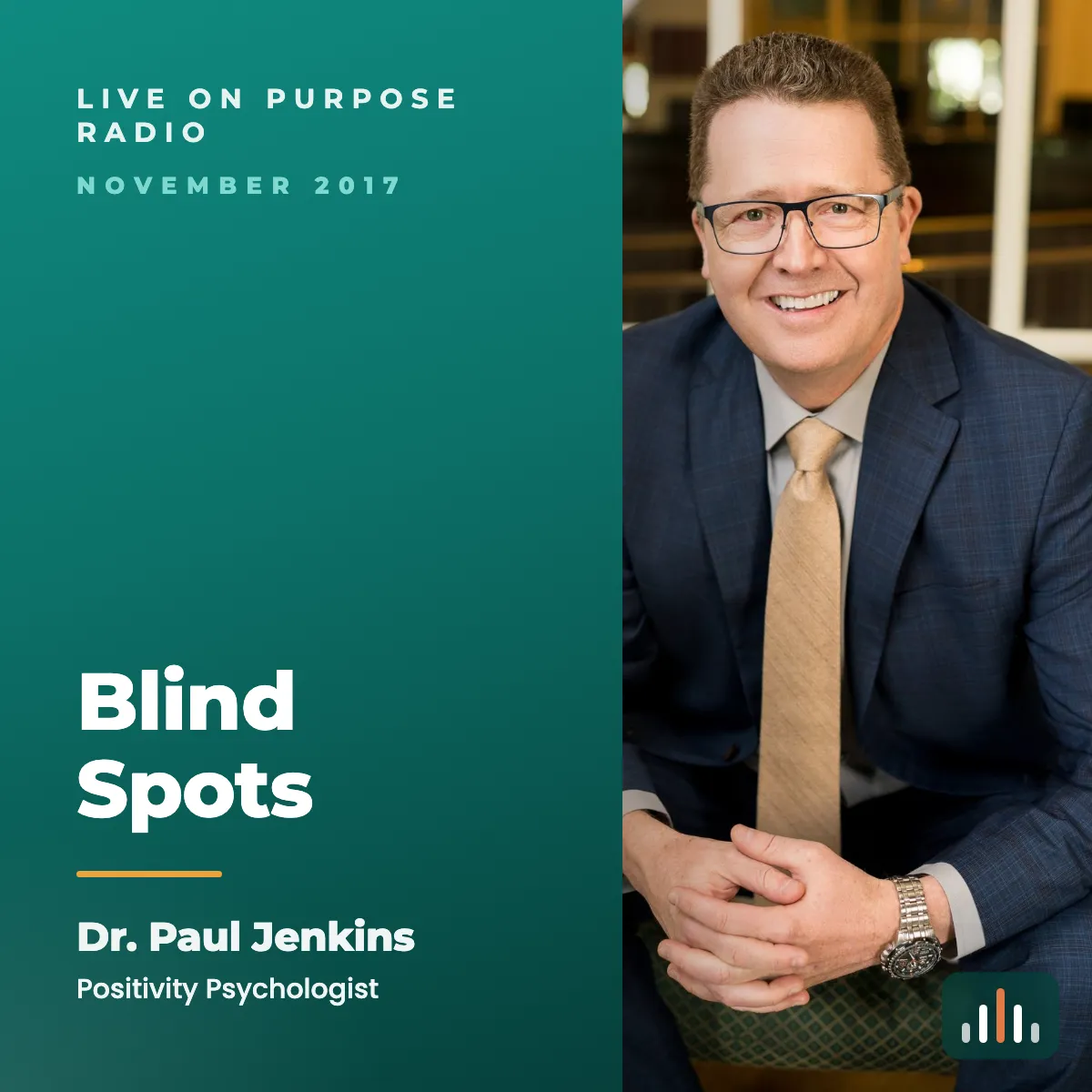
Welcome to Live On Purpose Radio with doctor Paul Jenkins, where you will hear inspiring stories of ordinary people doing extraordinary things. Feed your mind with a regular dose of positive energy and show up for your life every day on purpose. Living on purpose means that you have a purpose and you do it intentionally. And now, here's your host, doctor Paul. Hello, everybody.
Welcome back to Live On Purpose Radio. This is doctor Paul, the shrink who expands your life with another episode of Live On Purpose Radio. Kevin McCarthy is my guest today. Kevin is the president of the Portland, Oregon chapter of the National Speakers Association. Kevin and I have known each other for a while in that context, and he's got an interesting story.
Kevin was incarcerated, and that's always intriguing. Kevin, there's more to it than that. But you've learned through your experiences how to help people identify their blind spots Mhmm. Which, was part of the reason why you got incarcerated in the first place. Right?
Pretty much. Kevin, welcome to Live on Purpose Radio. Thanks, Paul. Glad to be here. Thanks for the invite.
Now I've given you quite an introduction, you know, setting you up as this ex convict. Oh, no. And it's probably not the first time, but, Kevin, share with our listeners a little bit behind that story. This is a... You were imprisoned for a crime you did not knowingly commit.
That is correct. And the awareness is the key issue there. They... Give us give us a little intro, just a little sense of that. Yeah.
You bet. Yeah. In fact, the keyword is not knowingly commit. I didn't I didn't knowingly commit the crime, but I did do the crime. And that's really important because I...
I'm not playing the victim here. And I want you, you know, everybody else know that, that I did what I did. What I learned the hard way was that under the conspiracy laws, only one person in a conspiracy needs to know a crime is being committed. So, yeah. So the boss was the conspirator, the head conspirator.
So a little back... Little backdrop. I, I ended up investing in a company shortly after the .com bubble burst. A buddy at church having coffee with me mentioned the, the idea that he was invested in another company that was getting ready to go IPO and I had just lost a fortune in the dot com bubble burst, so I was ready for another another win. Uh-huh.
So I I agreed to invest, very long story short here, I agreed to invest. I bought 10,000 shares of this company, this this quote unquote health care, preventative health care company was gonna go public and it was gonna be a multi billion dollar public offering through, some of the big major stock houses. So I was pretty pumped pumped up, pretty excited about it. Did as much due diligence as I knew to do, and I'm a little financially illiterate at times. But, about three months or so, two and a half, three months after I invested in the company, I get a call from the same guy from church who told me about the investment and the CEO of the company had heard through that grapevine about my business development background.
So I ended up getting a call from the CEO and he asked me, to become a consultant, for thirty days just to help with the transition period from the private company to the public company. Mhmm. I, I was to help him develop out the investor relations group. Mhmm. So I did.
So I took the opportunity. I ran... First of all, actually, Paul, I ran home and and told my wife about it actually after that phone call because I was super excited. That was... It was a, it was a very healthy, thirty day paycheck and a little bit more than I was already making as the president of a publicly held company.
And so, I ran home, told my wife about it, got excited, and she looked at me and she kinda shrugged her shoulders and she went, like, what do you mean? She said, yeah. She goes, I don't think you should do that. She goes, I think you should just stay focused and rebuild the real estate company like you had before. And I'm like, but you don't get it.
It's only thirty days. It's it's a lot of money, and, and it's not gonna fort my plans to start another real estate company. And she goes, I just don't... I don't know why. I just don't think you should do that.
Oh, Kevin. If we'd only listen to our beautiful lives more, Yeah. She'll never let me live that down. We celebrate our thirty first anniversary tomorrow, Paul. So...
Oh, congratulations. Oh, thank you. Yeah. And I, I did... One of the big blind spot lesson I learned is listen to your spouse or significant other even if it doesn't rationally make sense.
She had an intuition, and couldn't explain it. I rationalized the way. I took the job and that thirty day contract turned into fifteen months working for this guy who for seven years ended up running the largest stock fraud in the history of the state of Washington. Oh, wow. Yeah.
He took more than $91,000,000 from over 5,000 investors. And during that last fifteen months of his run, I never once saw prison coming. Wow. Yeah. Wow.
Well, I'm just putting this together in my own mind, Kevin, because how many of us are in situations where we don't see everything that's going on behind the scenes or around the corners or in our blind spots as you've come to call them? That's where the dangers are, where a lot of them are. Mhmm. Yeah. Because you'd...
And I I know you, Kevin, well enough to know that you wouldn't go out there and knowingly, or maliciously commit a crime. Mhmm. I hope I know you that well. Yeah. Yeah.
No. Absolutely. But most people wouldn't. Right? And that's the problem.
And so... That's the conundrum. And you ended up doing time for your participation in in a process someone else knew was shady. Mhmm. You didn't know at that time everything that was going on in your blind spots or around the corners or behind the doors.
So, you've learned a lot from that, obviously. Yeah. And and and a good friend said to me when I... After I got out, and I got out in 2007. So after that, I was talking to a friend who said, what's the biggest lesson you learned?
I said, blind spots. I had blind spots and we all have blind spots. And that began this new journey of, going back into the, the speaking world and then eventually writing this book, that we'll talk about later. Mhmm. And and and it's just that.
It's in hindsight, I look back on the situation. Imagine showing up at a prison for thirty three months. You have time on your hands. Mhmm. And and and because...
I mean, there was a time, Paul, when I was, an ordained minister. I mean, I had... I thought I had really good moral character, you know, a good moral center, and, and and you get behind closed doors in in a confined place. I didn't... I I can't say closed...
You know, behind bars because it was a it was a minimal security. No bars, no locks in the doors or anything. But I was confined, and I had to ask these very hard questions. Like, what was I thinking? How possibly could I have gotten here?
And how can I believe this guy? Where were the where were the red flags? Where were the warning signs? Because there had to have been warning signs. But I didn't see him at the time, and so that's began the deep reflection.
And in hindsight, there were. There was plenty of red flags. And he was masterful Interesting. At helping us... And I say helping us, the, the employees and and his followers, helping us rationalize the red flags.
So he, as the f... As the FBI agent told me, he said he... This guy, Lawrence, was, just masterful at colonels of truth stuffed with a lie. So he...... Mystical.
Yeah. So he basically was just like this this magician who knew how to just keep our focus and attention where it needed to be and shift, us away from the reality of what was really going on. And so in hindsight, I look at those red flags and I'm like, man, I just had all kinds of thinking errors. I had I had, issues of of context. Mhmm.
You know, within the context of the moment, it began to make sense. Sure. But in hindsight, looking back, out of context is like, how in the world could you possibly have believed that? Well, out of context, it's easy to look back and go, oh, yeah. Hindsight's twenty twenty.
Right? But in context, that's the blind spot. That's when we're in the midst of our context, of our of our moments, of the moments of life, the decisions we're making, in that context, it's really simple to not see our own blind spots. Right. Cool.
I'm thinking also of the concept of deception. Mhmm. Because if you know you're being deceived, you're not being deceived. Right. Yeah.
It didn't put... We'll think about that. Right? Because Right. As soon as you become aware that it's a deception, it's no longer a deception.
You see it. But your whole point is you don't see it. Mhmm. Now there are things we can watch out for, and you talk about, you know, warning signs or red flags or, these... Did did I have any indication?
And in hindsight, you can go back and say, you know what? That was probably one of those. Yeah. But you're also saying in the moment, you don't see it as that because you're still in the deception. Yeah.
Right? You know, and it's it's... There's so many factors that go into this, as you know, as a psychologist. So many factors that go into this, but think about those times all when when you're having a conversation with your significant other about an event that you both experienced together in your past. Right?
And you're just having this reminiscent moments, and you say something like, wasn't it wonderful that that that time we went to the Top of the Rock restaurant in in Central Phoenix and and that maitre d came out and opened the door and kissed your hand and we had this beautiful dinner and suddenly your your wife goes, I remember that anniversary, but that wasn't Top of the Rock. That was the Phoenician restaurant that we went to. And and and you're like, no. Uh-uh. I I can see...
I I see the whole drive up the mountainside, and I can back and picture getting out of the car and she's like, why? I saw... I see us driving down the road. I can picture pulling up to the valet. And you both are convinced a 100% that you're right because you literally are reliving the moment.
You can see it in your mind's eye. Right? Yes. And then suddenly, the worst part, especially for me as a guy, is when she pulls out the receipt and she said, I just happen to have this in my scrapbook. I'm like, oh, it was the Phoenician.
And she's got proof. And you realize, a a moment ago, I believed my story in my head because I relived it in my memories, and my memories were failing me. Mhmm. That's that's just an example of how blind spots work in the context of our decisions. Yeah.
You know what, Kevin? You're reminding me of an earlier life when I used to do a lot of evaluation work. And one of the things that I became very familiar with is something called false memory syndrome. Mhmm. And it's where you have a clear and very determined memory of something that never happened.
Wow. It's so goofy that this can happen, but it's been well documented in psychological literature this can happen. And it's interesting that memories that are recovered under hypnosis, for example, because you think, oh, well, I'll just go under hypnosis and that'll, you know, some magic wand kind of... Memories recovered under hypnosis create more confidence, not more accuracy. Wow.
That's interesting. I didn't know that. Even more convinced that they're right. It's no more accurate. Wow.
That's just... That's fascinating. Human mind. It's... I I can see as as we come up on this first break, Kevin, I can see that we're creating a dilemma here.
Yep. Because, earlier on the show, I had Stephen m r Covey. He he wrote a book called The Speed of Trust. Mhmm. And as we trust people, it accelerates our ability to do business, for example, or to have agreements.
Trusting someone accelerates that whole process. Mhmm. You trusted someone that led to thirty Mhmm. Thirty three months at the bed and breakfast. Yeah.
It's... We don't want to completely throw trust out the window, but you're you're bringing something to our awareness here that is so important that we have blind spots. Mhmm. What are we gonna do about those? Yeah.
And still not sacrifice all of the trust that might help to accelerate our relationships. That's right. And there's ways to do that. However? Yeah.
Yeah. Awesome. Well, great. We'll get into that as we come back from this first break. Folks, this is Kevin McCarthy at Live On Purpose Radio today.
We'll be right back. Hey, Live On Purpose radio listeners. The fact that you're listening to this show probably means that you're a fan of personal development. Your personal development library should include copies of both of my books, pathological positivity and the pocket sized companion portable positivity. There's a.com for both titles so you can share these books with others.
I also have a special offer just for listeners of the show. Go to doctorpauljenkins.com/lopr for live on purpose radio. I'll send you signed copies of both for a special discounted rate. That's doctorpauljenkins.com/lopr. And welcome back, everybody.
Kevin McCarthy today at Live On Purpose Radio. Kevin, you've introduced a dilemma to my mind here, and I I introduced it just before the break. There's this this trust that accelerates relationships, business deals. I'm referring back to Stephen M. R.
Covey's work on this. And you're well familiar with that that concept. And then there's this whole thing about blind spots and how you ended up doing some some serious time for some... A crime you didn't knowingly commit Mhmm. Because you were involved in a conspiracy with someone that you trusted.
Right. So can you help us resolve that dilemma at all? Where are we gonna go with that, Kevin? Yeah. No.
That's a that's a really big dilemma because you don't wanna you don't wanna stop trusting people. That that just is counterproductive. But I really feel like... You go there. Have you noticed?
Yeah. There there are people that that go there and that's that's not that's not the way to live on purpose. It's not a great that's not a great way to live because it just kinda shuts you off from, from all possibilities. So we we still wanna trust, but I speak to a lot of, different organizations. And and one of the organizations was a certified fraud examiner's organization, which is funny because I'm like a specimen for them.
It's kinda hard. But they have a they have a slogan that I picked up, from from those groups, that is trust but verify. And trust but verify. And so take for example, the the concept that, you know, at some point, most of us will get hit up by a friend, a colleague, or somebody that we trust who says, hey, I've I've got a great financial advisor or I've got a great friend who who I've been getting these great dividends from or some story of I wanna promote something that I'm so excited about to you. And you Right.
And our our nature would be if if we're fairly trusting, most of us are, our nature would be to go, okay well Paul, because you invested, it must be a good investment because I trust you. I trust you. Right? But just because we trust each other, doesn't mean we should throw our brains out the window and not validate or verify. And by the way, on on the reverse side, just because I would say, hey, I'll validate or verify what you're saying, doesn't also...
Doesn't mean that now I don't trust you. That No. That make sense? In fact, you know what, Kevin? This is such a powerful relationship tool if we'll if we'll use it that way.
Mhmm. Because somebody might come back with, well, don't you trust me? Mhmm. A good response might be, yes. I do trust you, and that's why I want to build that trust through verifying what you've told me.
Nice. Yes. It would build it. Here's another example. I've worked with a lot of families, and occasionally, families with teenage young people in their home will have certain predictable issues that come up.
And I remember this family I was working with where this kid was sneaking out of school and smoking pot out behind the woodshop. And he had made some progress. He was doing pretty well. Well, we got to the point where I suggested to the parents that they might wanna invest in some little urinalysis drug kits just to verify that he's still doing well. And he just came unglued.
He's like, don't you trust me? I've been doing so well. And we were able to turn it back into exactly what we're talking about here. Yes. We trust you.
Mhmm. And as we verify your word, trust grows. Right. Right. So then he suddenly...
It switched for him. This this kid saw it as, oh, okay. This is the way I build the trust. See, if he does... If he's worried about the way that test is gonna turn out, he's not gonna see it that...
He's gonna fight it. Mhmm. Yeah. Yeah. Totally.
Give me the test. Exactly. I want something to be able to verify my word. So anyway, that's just another twist maybe on on exactly what you're sharing with us. So trust but verify.
Trust but verify. It's a it's a healthy part of any good relationship. Now, as you just, explained really nicely with that, with analogy. The other ideas, is be skeptical, but not cynical. It it it...
Oh. Just be skeptical, but not cynical. In other words, again, we can challenge not just what other people are telling us, but but literally challenge what we're telling ourselves or challenge our own belief system or challenge the mindset that we have, challenge the feelings that we're feeling, challenge the emotions that that are charging our decisions. We can challenge by being more skeptical. In other words, not necessarily believing every memory is exactly as it is because we know from experience that that just may not be true.
So just because I'm having another discussion with my spouse next year and we're discussing another event, we don't have to escalate our discussion if I would just take a step back and just be a little bit more skeptical about my own belief system and go, you know what? I think I'm right, but I could be wrong. And that's okay. Oh, wow. You know, it's...
And that has reset my marriage. That has allowed us to deescalate areas in our marriage that has escalated in the past because one of us just wouldn't back down and usually it was me. So... I had, Brett Williams on the show not too long ago. He's the author of You Can Be Right or You Can Be Married.
That's a great title. That is a great title, and it's exactly what you're talking about. I think it's important to not be too quick to believe everything that we think. Mhmm. Yeah.
And of course, you're gonna be skeptical about what other people are saying, without being cynical. Can you can you illustrate that difference just a little more for us? Yeah. So to be skeptical without being cynical, as a... As somebody who's going to approach my thinking more skeptically, or approach our conversations, or the the validation of research, or whatever it is a little bit more skeptically, I'm just basically saying I'm engaging my rational thinking and I am going through and processing what I am and what I'm seeing.
The events I'm seeing, the stimuli, whatever it is, the the feeling. I'm a processing it in a way that says, is it true? Could it... Is it possible it's not true? What would happen if it's not true?
How would I feel then? Or what would the outcome be if it's not true? And I go through these rational decision processes that that then help me to come to a more clear decision versus Right. Right. Being cynical is...
It doesn't really matter what you're telling me, Paul. I just don't believe you. I I don't I don't believe most people, you know. I I already have judged you or I've judged the situation the way I've judged it because this is my cynical nature. I I have been burnt enough times.
My my my shell is thick enough, and, and I'm not going there anymore. And so everything, my outlook on everything is very anti, very negative, very untrusting, and that becomes very cynical. That's not healthy skepticism. It's like you've you've claimed the opposite position Yeah. Just to be oppositional almost.
Yeah. Or because you've decided, I'm I'm never gonna believe that. I'm... It's really more of a digging in your heels where I'm hearing your description of being skeptical is more of an openness. Right.
And you turn... You engage your cognitive ability to go do some diligence about this thing. Yeah. Yeah. Exactly.
Without necessarily, digging your heels in as you put it. Because there's... There are other blind spots. There's a lot of blind spots, and and they... It can get a little bit complicated.
I try to always make fun make fun with it and and have a have a little bit of a lighthearted attitude toward blind spots while demonstrating the, the gravity of what they can be doing to us. But as you talk about digging in your heels, I mean, a very common commonly known blind spot is called confirmation bias. Oh, yeah. Sometimes we can be thinking that we're just being skeptical. I'm just approaching this rationally and trying to to come up with a really clear decision.
But if we're not careful, that confirmation bias, which basically says, I have a a an unconscious bias that I want the outcome to be a certain way, or I already already have a I have a presupposition the outcome is gonna be a certain certain way. So even in my rational thinking process, I become blinded, if you will, to potential outcomes that don't support what I already believe to be true. And it's not that I'm being cynical. I have an unconscious bias taking place here. And that subconscious process that you're talking about is one that we are not aware of.
Right. By definition, because sub means below, like subway or sub. Conscious means awareness. So it's in a in a space where you're... It's already in a blind spot.
Mhmm. You you just identified one of the most common pitfalls in our own cognition, and that is confirmation bias. Mhmm. Where your mind will look for, find, or create evidence that you're right about whatever your current position is. Yeah.
Yeah. Which was a big one in our... In this case because we all, in fact, most of the folks... There was 34 employees of this company, many of which had stock in the company as well. Mhmm.
And our stock portfolios kept growing because we were given bonuses in stock. How generous of him. But the confirmation bias really was a helpful tool that he played on because he knew we were all focused on the IPO, the the fact that our portfolios were gonna be worth a fortune. We then, even subconsciously, whenever he... Whenever red flag in hindsight, whenever red flag came, we then wanted to believe.
We we looked for ways to believe him. And we then ignored to some degree the the contradictory evidence that would say, wait a minute. Why should you believe him on that story? And of course, I go into the details in the story in the book, but it's... For time's sake, we don't have time for all the details.
But that's... Yes. The stuff, it really impacts impacts our decisions and that's a that's a... And not just at work, Paul, but at home, in our relationships, our, you know, friends and family and our church and social communities. I mean, these blind spots are everywhere.
I like to say, what are they doing to you? You know what, Kevin? A part of this story that we haven't acknowledged yet, but I think deserves some acknowledgment, is is your courageous addressing of this difficult thing that happened to you. Stuff happens. Mhmm.
Right? I think there's a bumper sticker in this. Might be a little different. Things things come up. Things happen.
And sometimes it'll blindside you because it came from your blind spot. Mhmm. And I think there's there's a couple of options we have at that point. And some people choose to not trust and to be bitter and angry and cynical. Mhmm.
And my experience with you, Kevin, is that you've taken this and you've you've acknowledged, okay. Yeah. That... Ouch. That hurt.
And what is the value in this experience? Mhmm. Because now as you're mining the value from from this experience that you've had, and as you share that with other people, it opens their eyes to some of the blind spots they might have, and it causes a higher level of joy and liberty to be experienced among the populace of the world Mhmm. Which I think is awesome. And I wanna compliment you for that, for taking on this story with with a level of courage that I think is commendable.
Well, thank you. I appreciate that. It's it's passion for me, and it's, we... You know, my feeling, Paul, is that we are all on this journey we call life. Right.
Right? None of us none of us have all the answers, and we are all going to make bad choices at time. That's why good people make bad choices, is the subtitle of the book. And we, you know, we we should learn from these, and it doesn't have to define... Those bad choices don't have to define who we are.
So... But here's the key. The key is we need to be vulnerable enough to own up to the bad choices. And like you said, look for the lessons in them because every bad choice has a positive lesson in it. And that's the awesome part of this.
Right? And so... And vulnerability is key. And and I remember going to a, my wife years ago, Rachel, years ago, she's like... She gave me this choice.
Do you wanna go to a marriage counseling, or do you wanna go to this this home group, where they do a a marriage class, you know, with a small group of people in in a home? It's a it's a huge network. It wasn't a yes or no. I didn't have a yes or no option there. She was pretty smart.
So I I said, well, forget the counseling, but let's go to this home group. Well, she brings me this home group. Well, what... I was very closed off. I had my arms folded, typically, you know, the the body language thing, I'm, like, just barely there because she dragged me there.
Right. Lights on, but nobody's on. Right. But somebody got up, and young a young, a man and his wife stood up in front. They were sharing their story of having gone through thirteen weeks of this class, how their marriage was fragile and on the edge, because he committed adultery.
He's telling this story. And as he's telling this story, his wife is supporting him right next to right next to him. And it dawned on me that it broke through my barrier because of his vulnerability. He was willing to say, listen, you know, I'm a I'm a business person. I'm an ordinary guy.
I'm just like you, and I I messed up this bad. Right. And here's how we're getting through it. And I went, gosh. I can, you know, I can esteem a guy that that has his stature, his appearance, and everything else, and suddenly, now he's being vulnerable and saying, look how look how bad I messed up.
And it set me free back then to just be more vulnerable and to to to want to change and be a better person. And so that's my passion, my mission now. Paul is like, you know what? I I messed up. I made some bad choices.
I paid a hard price for it. My family paid a hard price for it. Thank God, that Rachel stuck by me and we're celebrating 31 tomorrow, which is awesome. But we had to pay a hard price for that. And if I can help other people break through that...
Their own barriers by sharing this and being vulnerable enough to say, I'll take whatever blows come. But you know what? I learned something. You need to learn this as well because we all have blind spots and, you know, until you understand that, those blind spots are affecting your decisions. They are.
Yeah. Whether you know it or not, they are... That's right. They are affecting your decisions. So let's become more aware of our blind spots.
Let's learn how to mitigate those blind spots with various tools such as the trust but verify as a tool. If we just keep that in the forefront of our thinking from now on, that's one way to start mitigating the effects of our blind spots. And then we can make better decisions, have a better life, have better communications, have better marriages, better relationships with our loved ones and and friends. And frankly, when it goes right to the bottom line of any corporation, we become better employees, we become happier, become happier employees, we have less conflict in the workplace. I mean, so the idea of mitigating our blind spots has an...
Has a massive effect in every area of life at work and home. Yes. That is a strong message that I think I'm getting from our conversation today, Caleb. You you gotta turn on your brain. Yeah.
Don't don't turn off your heart. Right. Keep that there. I like that. It's okay to trust and to verify.
Yeah. It... It's okay to be skeptical and Mhmm. Get this through, but not become cynical and hardened. I love it.
Yeah. I love it. Kevin, you're sharing this message in a number of ways, including from the stage, as a trainer, presenter, keynoter. You've also got a new book just coming out now, Blinds. Yeah.
Tell people how they can get a hold of that, where they can find you. Oh, my. Certainly. I'm certainly excited about this. A labor of love, and and a lot of a lot of sweat and tears that went into writing this book, Paul.
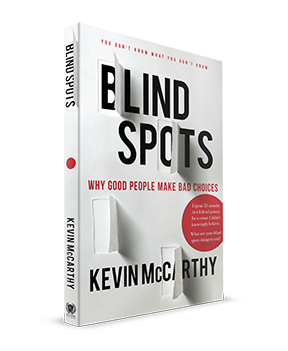
Oh, yeah. But I, I've been pushed by many colleagues to to finally get it done, family members. So I did. So the book is called Blind Spots Yes. Why Good People Make Bad Choices.
And that book is available now on Amazon, and many of the other retailers online. And you can get it, by simply clicking or typing in the word blind spots. Put my name Kevin McCarthy in there or blind spots why good people and it'll it'll show up very quickly. And, and the Kindle version is also available and I'm working on the audible version as we, as we speak. Nice.
Easy. Yeah. Excellent. Thanks. And I have I have reviewed that book and it is worth the read.
Thank you. You've done a nice job with that, Kevin. And I think it it illuminates some of these important principles that we've been talking about today. That's Blind Spots by Kevin McCarthy, and that's spelled m c, capital, c a r t h y. Did I get that right?
Yes. You did. Awesome. Thank you so much for sharing your story today with with us here at Live on Purpose Radio. Oh, my pleasure, Paul.
And thank you so much for the opportunity to serve you and your audience, and, I love it. It's appreciated. It's been great. And, dear audience, it's now your turn. You've heard it from the man.
There are blind spots. They do affect your life. We can be aware of those, and there's something that we can do about it. So now it's time to go live on purpose.
Open the transcript on its own page ↗