Welcome to Live On Purpose Radio with doctor Paul Jenkins, where you will hear inspiring stories of ordinary people doing extraordinary things. Feed your mind with a regular dose of positive energy and show up for your life every day on purpose. Living on purpose means that you have a purpose and you do it intentionally. And now, here's your host, doctor Paul. Hello, everybody.
Welcome to Live On Purpose Radio. This is doctor Paul, the shrink who expands your life. That's another episode of Live On Purpose Radio. My amazing guest today is none other than Art Coombs, or shall I call you Arthur? No.
That's what it says on your books. Yeah. Arthur f Coombs the third, which sounds really... Yeah. Hoity toity, guys.
Hoity. But Art's been on the show before. You guys might remember when we talked about his book, Don't Just Manage, Lead, which has an interesting little quotation right at the top, little endorsement from Doctor Paul. Doctor Paul. Yeah.
I don't know how he got on the cover of your book or the front cover no less. Actually, I I... To to be quite candid, it wasn't me who decided that. It was my publisher. It makes more sense then.
It was it was the it was the publisher, and I said, Paul would love it. So let's go let's go with it. I think it actually lends more credence when you have a third party who knows nothing about the relationship. Choose your quote as the most powerful quote to put on the top. And so I...
Absolutely. Well, because we've known each other for a long time, and you contacted me and say, hey. Would you write a little blurb for the book? And I'm like, yeah. I'm happy to do that.
So I just sent you this little blurb as a friend, but also as a professional psychologist. And I get to... I get asked to review books all the time. This was a good book. Yeah.
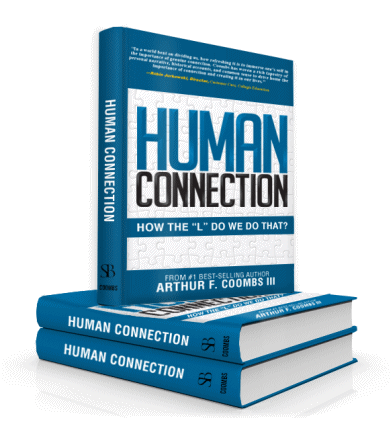
Well, I was... You you were very kind. And and some important principles. Now you've got another one. It's called Human Connection.
Subtitle? How the l do we do that? How the l do we do that? L in quotes because you have a list of l's Exactly. That we might get to.
Exactly. I'm sure we will. There's another book in the works, and I'm kind of in the loop on that one. Absolutely. About hard easy.
Yep. It's about how we live our lives and how everyone has a choice. Yeah. And we can live our lives one of two ways. We can live easy hard or we can live hard easy.
And by...... Those. You can choose the first. I choose whether I'm gonna live easy. I can't choose the latter.
Right. Because it follows as the natural consequence. Just as gravity happens to everybody, I don't care if you understand gravity. Gravity is going to apply itself in your life whether you understand it, agree with it, disagree with it, wanna fight it. It doesn't matter.
This is the same way. Mhmm. You can live easy hard or hard easy. And, yeah. And I I thank you so much for helping.
Powerful concept. Simple. Simple and easy aren't always the same thing. No. We're we're we're gonna try to take a look at it from multiple angles.
Yeah. So very much like Mount Timpanogos, takes on a very different look and feel if you were on the backside of Heber or maybe at at Sundance Skiing. Mhmm. Mount Timpanogos looks very different. If you're on the West Side where we live, it takes on a completely different form.
So I'm gonna try to look at this concept from multiple angles, and hopefully, the objective here is for the reader to have, oh, okay. Simple concept. Mhmm. Oh, ah, that's a that's a perspective I didn't anticipate. Right.
I wasn't I wasn't, but it's true. It rings true. So, anyway... So, dear listeners, you're probably getting the sense that art knows a few things. At least you put on a good show.
No. Well, the the sad reality is often my works are born out of my own mistakes. Right. And I I think especially the easy hard hard easy, I think if you read a lot of self help books Mhmm. One of my challenges is that the author sort of often will say, I'm proof.
You know, I made a million dollars before I was 25, or I own I own a home in Hawaii, and I own a home in Vail, and I have this amazing relationship with my spouse for fifty years or whatever it is. Right? I'm in incredible shape, or I'm super wealthy, and I've got it all together. And I've applied these rules in my life. Therefore, you can too.
Right. Mine's the exact opposite. I... I've made so many mistakes that I've been beat over the head so many times where I'm like, oh, okay. Now I get it.
Yes. Which may be a more powerful form of learning. For for me, it is. It's... You've...
Well, you've shared this in your books. You're a speaker. You're a a leader in the business community. You've been able to apply these things in a very practical way. My sense of of this second book...
And I'm... We're still waiting for the third book. Right. Right. Right.
Come on back when that's published. Right. Right. Right. Right....
About that one too. On this second book, Human Connection Mhmm. It... It's almost like you're taking what we used to refer to as the soft side of of leadership or business. And you're presenting it from your experience in a way that that makes sense from a logical standpoint, but people are gonna feel something there too.
Absolutely. And we have a little chat over lunch about this, so I'm hoping we can renew that a little. Absolutely. Yep. And that...
You're exactly right. So in sort of dovetailing from don't just manage lead into human connection Mhmm. A lot of people... The the the easiest thing for people to do is manage. And when you manage, you talk to the head.
And you circle and focus and you're relentlessly talking about who, when, where, how. How much? How much. All... But the one thing you're missing, managers don't spend any time.
They don't talk about the why. The why is often an emotional issue, not an intellectual issue. The the key and what I'm trying to hit on in this book in Human Connection is you can't get someone, you can't connect with someone or you can't motivate someone to change until the heart is convinced that the head has it right. Okay. Wait a minute.
Say that again because that's powerful. The heart has to... No one will ever change. Me Yeah. You, your employees, your kids, your spouse, no one will ever go through real transformational change until Right.
The heart is convinced that the head has it right. So you gotta have both really. You've got to have both. There's got to be an an education of true principles and often it involves numbers and measuring and and, you know, raw data and facts and the logic and the whole thing. But until your heart is convinced through emotion, It's not...
Then you don't move. You don't change. It's not gonna... You're just gonna continue to tread water. It's when your heart is convinced that your head has it right.
That's when you're motivated to move. I can I can I can go on diets all day long? I can... I know what to eat and what not to eat. I know I should exercise.
I know I should stop smoking. I know I shouldn't drink as much. I know a whole lot of things. But why don't I stop? It's because my heart is not convinced.
I haven't been get, I haven't I haven't created the why in myself. And in human connection we talk... I I talk a lot about that. And the five l's really... Yeah.
How the l do we do that? How the l... I'm... You better let him know what the l's are too, How the l's. So it really is about...
The book is about living large and how to how do... And and that has a lot of definitions, living off of wholesome, fulfilled, robust life. One that truly creates happiness and peace and tranquility. But how do we do that? It's critical we do that through connecting with others And I break that down, so I sort of back into living large through this human connection.
That's the one link. If you cannot connect with others, really truly genuinely connect with others, you won't be able to live this life that you are. This is really the defining factor here. Exactly. It won't...
You won't be able to live that life. And we live that. We connect. And I sort of serendipitously backed into this. We...
In my opinion, it starts with the first l is laughing. Mhmm. And again, you'll notice laughing is an emotion. Laughing comes from your heart. Yeah.
It's an emotional reaction. It's it's almost spontaneous. It's not real laughter. You don't think about, oh, I'm about ready to laugh. You know, you hear something you enjoy...
It's hard to fake one. You can't fake it. You can tell if someone is. Totally. If you've ever been, I'm sure the majority of your listeners have either seen or been on a dating site.
What is the number one characteristic that women want from men? They want you to laugh. They want humor because they know it can't be faked. Right. They...
You cannot fake a laugh. And what's the number one thing a woman wants from a man? I wanna trust you. I wanna know who you really are. And through your laughter, I'm going to learn.
That's how you know. That's the human connection that you're talking about. Human connection. What's the very first... On this planet, we speak almost 6,500, a little over 6,500 languages are spoken on the planet.
Yeah. That's crazy. The number one connection, the the thing they all have in common are laughter Mhmm. And crying, which is the opposite of laughter. Basic human emotions.
At at about 2.5, babies will start to laugh. Now, I don't know of any parent who's ever had a baby that is on social media that doesn't post their child laughing thing. The very first time. It's such an incredible moment. So reinforcing too.
Our... I was just on a a Zoom call with my grandson who's a year old. K? Doesn't speak English, but he laughs. He laughs.
And I can get him to laugh. And every time I can get him to laugh, he loves it, and I love it. And you love it. And I find myself doing the goofiest things Acting like a fool. To...
Right? Right. Because of that laugh, and it causes a connection between us. Absolutely. And what's that laughter saying?
That laughter is saying, I feel safe with you. I want to connect with you. I like you. I like you. Mhmm.
I love you. I want more. I want more of that. Yeah. That's what laughter is saying and you can't fake it.
So that's laughter. Nice. And then the next one we talk... I talk about learning Mhmm. And how important it is to continually be learning.
And for me, writing is for me that part of that journey, my personal journey. Right. I'm constantly trying to think of, okay, how can I expand this? If I find it interesting, I wonder if other people would find it interesting, and I wanna put myself out there and learn. And...
Art, I've known you for a lot of years since before the books were written, before this creation process happened. And I can see because I know you and I've read your books. I can see that this is a way that you have condensed and compiled your learning, what life has taught you. And then sharing it with other people, it solidifies that learning. You get to own it even more.
I I love it. And one one of the concepts I talk about in learning that really took me a long time to really understand is my perception Mhmm. Is wrong. Always. Is that bad news?
No. It's actually liberating. Right. It's liberating. My perception's always wrong.
And when when I I I can think of... I mean, the the example that pops to mind is our last political election. And on on social media, I was inundated with people who were so passionate, so passionate that their side, their ideology, their political beliefs were the only way forward. And right. And right.
Mhmm. Right. And and so the example I like to give and I I sort of stumbled upon this when I was playing Uno with my kids up at the cabin. Mhmm. My daughter laid down a six.
Mhmm. Now even though it has that line underneath, it still takes a second, but my son looked at it and it was upside down and he said, oh, you put down a nine. Right. No. That's a six.
So if you take the line away and you lay a nine or a six on its back and you go to one side of the audience and you say, what is that number? To them, it'll go, that's a nine. That's a nine. But if you go to the other side of the audience, they'll say, that's a six. Right.
We're both right. We're both right. But... Yeah. But it's just perception.
It's perception. Right.... Angle you're coming from. And and and what I've learned though is when somebody walks into my office or my kids walk into my my room and they present something, I literally have to say my perception of this situation is wrong. And when I do that, I'm truly open to their ideas.
Right. If I don't do that, what I find myself doing is just watching their mouth move and waiting for the pause. So that you can dig in So that I can jump in and prove that it is a nine, not a six. I think we can go somewhere with this, folks. This is Art Coombs today at Live on Purpose Radio.
We'll be right back. Thank you for listening to Live On Purpose Radio. We're so glad to have you here. Please come by the website, doctorpauljenkins.com, spelled with a d r. Doctorpauljenkins.com.
On the website, you'll have an opportunity to receive a free download and while you're there, make sure you click on the social media icons. Come over to Facebook where we will be posting these episodes as well as our YouTube videos and other content and announcements for you to share. Please like us, comment, subscribe, join the conversation. We're happy to have you with us here at Live On Purpose Radio. Let's all support each other to live on purpose.
Drpauljenkins.com. And welcome back. Live on Purpose Radio with Art Coombs today, who is a prolific author and speaker and leadership expert and business guru and all that fun stuff. But anyway, glad to have you on the show, Art. That...
That's your perception. Well, that's all I got, man. Your perception's always wrong. Remember, we just talked about that. We just talked about how what if we had that?
Or what if we had that humility to say, you know what? Here's what I think and I'm probably wrong. I don't even start with here what... Here's what I think. I literally get in a space where I go, I am wrong.
I'm wrong. Come in and sit down and tell me what's what's going on. And it's made all the difference. Which which leaves you open to some other possibilities. Totally.
And honestly, you were talking about Timpanogos earlier, the mountain that's here in our beautiful valley. And a lot of our listeners are from other places in the world, but we've got this beautiful mountain. And you and I both live on the West Side Of Timpanogos. Well, I grew up on the East Side. So I know that I'm right that we currently live on the back of Timpanogos.
Yeah. That's interesting. Because I think we live on the front of Timpanogos. Well, and the whole county calls it the Wasatch Front, meaning this is the front of TIP. Well, I grew up on the other side Right.
Which is always the front to me because that's the side I always saw. To me, that's the that's the prettier side. It is the prettier side. I have to be honest. Yeah.
But it feels like the front side to me. See what I'm saying? So it's all perception. Yep. And it's not that you're wrong.
You know, that word might trip people up. Forget about being wrong for a minute and just consider that it's just your perception and it's only one small picture. It's your perception. A much greater picture. And and the critical thing is to be able to truly entertain Mhmm.
The thoughts and opinions and perception of someone else Yeah. Without necessarily accepting those thoughts, opinions, and perceptions. But if I can truly, empathetically entertain them and not cast judgment, not cast condemnation. Mhmm. I can really step back because if I start the conversation with this is the front.
I don't care where you live, Paul. Dude, you're crazy. This is the front. We can go to any textbook and it'll say the Wasatch Front. Any idiot knows.
Everybody knows. That's a six not a nine. Right? So the next l... Yeah.
You've given us two. Right? Right. The next l... Well, three with the final one.
The next l is leading. Leading. So we've got laughing, learning. Leading. Leading.
And leading there takes two angles. In fact, every single one of these l's takes two. There's two sides. You have to be able to lead when appropriate and be led. You've got to have the humility, again it sort of dovetails into what we were talking about.
I have to have the ability to step back and go, okay, just because I have the title CEO or father, it doesn't mean my perception of this situation is exactly accurate. I have to be, I have to allow space, safe space for employees or kids to say, no dad, look at it this way. And the reality is all too often, I say, you're absolutely right. You know, I can see it from your perspective, and let's go with it. You know, let's Yeah.
Let's do that. So... That's... You mentioned earlier that that has essentially changed the game for you. You approach life differently since you happened upon this truth, this principle.
It is it is created more serenity. I'll get emotional here in a second. But it's created more serenity in my life, more tranquility Peace. And peace than I can possibly describe. Is that ability to just let go, to truly forgive and to just let go of that anger Yeah.
And let go of that that perception that you have all the answers, that you've gotta fight for your identity, just to let that go. Oh my gosh. What a relief. That's huge. It's a huge weight.
You know what? You don't have to carry that burden. Don't have to carry it. You didn't think it was burden before. You thought it was like your moral duty to do your heels out.
Yeah. You almost you almost feel like, well, if if I see it this way Yeah. Then how could anybody in their right mind see it any other way than I see it? How prideful is that? Yeah.
Exactly. How how... Why is it that so many people think that they have a complete monopoly on truth? Yeah. Can you...
Just think about how arrogant that is. Right. And think about how dangerous. Because when you are so ingrained that this is the only way to live your life, the only political system that will ever be meaningful and good for people, or religion sometimes can go that way. When I'm so entrenched and people don't agree with me with me, now there's alienation.
That alienation can grow to frustration. Frustration easily grows to hatred. Hatred go... Goes to elimination. That's why we have people with...
With discrimination. Yeah. With religious vigor willing to eliminate those who don't believe the way they believe. Right. That's why we have people who are alienating and shunning and not connecting, and they justify it because you don't think the way I think.
I'm okay Yeah. With treating you sub... Almost subhuman. Right. You you you obviously are...
Lack the intelligence to believe the way I believe. Either you're an idiot or you're evil, one way or the other. And and... You're below me. Right.
And I don't... I can't associate with you. In fact, if I'm not really careful, I'm going to eliminate you. Yeah. So now now Well...
Now we... Where do we go from there? We go to love. We go to love. We go to love.
You know what? And I I love that this last still is love. I I wrote a book called The Love Choice. Uh-huh. And in that book, I pointed out that every interaction we have with another human being is going to fall on one side or the other.
I don't think there's a neutral option. It's either going to be a love choice or a hate choice. It's going it's going... You're gonna provoke one side of the of the other. Right.
It might be a little or a lot. Right. But it it has to fall on one of those two sides. And I use the word hate because people hate the word hate. Right.
Right. Right. Right. That's fine. Right.
Let's get clear, though. If it's not a love choice, what is it? Right. Right. Right.
Yeah. The the story of the example I... And I think I told you this, the example of the $100 or the $100,000. You know, what do you have in your emotional bank account? What do you have in your own self worth?
How important is that? And the story I like to tell is, you know, you're working your tail off and you make a $100. Mhmm. And I invite Paul over to dinner and I set that $100 in cash on the counter and I notice you steal it. I pill for it right off the counter.
You take it right away. Yep. Now when I ask audiences... Just like me, aren't you? Yeah.
Exactly. And out of the corner of my eye, you don't think I know. Right. I was stealthy. I ask audiences and you're standing there looking me straight in the face thinking that I don't know what you had just done.
And I like to ask audiences what would you do if you were me? And they without question they always say, well I would confront Paul. I'm not gonna let Paul get away with that. I just earned a $100 and I don't care how good of a friend you are, I'm gonna address the situation. And there's almost angst.
There's a little bit of beating your chest and righting the wrong. Yes. And I'm gonna, you know, but I like to twist a story around. Let's say I work my tail off and for some inexplicable reason, I make a $100,000. Let's say over the course of three or four or five months.
I make a $100,000 or for some reason I put that $100,000 in cash on the counter. Now just envision that. I've got a $100,000 neatly stacked in $100 bills. Yeah. And it's a big pile.
And you keep it on the counter. And I keep it on the counter. That's where I keep it. Yeah. Yeah.
And you come over for dinner and you nick, you take a $100 off the top. Yeah. Same $100. Same $100, the same players are involved. Mhmm.
But when I ask people and they really mentally put themselves in the position of a 100,000 on the counter, their emotions and their reaction to the situation completely flip. Yeah. Because it goes from almost confrontation to compassion. Just like you said, you're either on one side or the other. And when I truly believe I have a $100,000 on the counter, I'm now far more compassionate.
And often I'll hear comments like, well, I'm not even gonna talk to Paul. I don't wanna embarrass him. If he needs that $100, I'm gonna just let him take it. Interesting. Or some people say, no I would, but I would approach Paul with tears in my eyes and compassion.
And I would say, Paul, I saw you take the 100. Let me give you two more. Let me give you three. Let me help you out. What do you need?
And all too often That would be interesting. When in business, we feel slighted. Mhmm. Or at home, we feel someone, you know Cheated us. Cheated us somehow or Wronged us.
Wronged us or we're merging onto the freeway and someone cuts us off or doesn't let us merge, you know, they're... They got that aggressive driver moat. You know? What is in our bank account? How are we gonna handle that situation?
Just like you said, I have a choice. I can treat this interaction with this other person from a position of true tranquility Mhmm. And love and compassion and empathy, and I can say it's okay. It's alright. Yeah.
You want the bigger piece of pie? I have mine too. I'm okay. Or I can treat the angst. It it depends on where you're starting from.
There's this mentality of abundance. And that's what you're saying. How much is in your account? But are you coming from a place of you got plenty? Right.
Or are you coming from a place of scarcity? Yes. Which is when you're gonna cling in the horde. Right. And you're gonna fight, and you're gonna you're gonna Yeah.
Be aggressive. But when you're coming, you know, coming at that position from abundance... So love and and I think, like I said, in all the l's, I think the most important thing is you have to love yourself that sort of ties into that $100,000 story. You have to love yourself before you love others. If you aren't truly centered, if you don't have love for self and real self esteem, not parent esteem, not stranger esteem, not clergyman esteem.
I used...... All external. That's all kind of stuff.... Live in that world. I would allow other people and how they felt about me determine how I felt about me.
What your account was. That's not self esteem. Self esteem is art. Me, I. How do I feel about me?
Yeah. I don't give a patoot on how the clergy... My clergyman feels about me, my my neighbors, anything. It's about me. Anyway So human connection.
How the hell do we do this? Right? We've got laughing, learning, leading love Loving and living. And then living large. Being present.
Some good good tags there. How can people get a hold of that book? You can find it on, Amazon. You can find it on Barnes and Noble. It's available on Google Books.
It's in Audible. I... I'm really... It's a good way to listen to books. I love the auto...
Audible version. So, you can find it in a lot of places. Yeah. Wonderful. The the title again, Human Connection.
Subtitle, how the l do we do that by Arthur f Coombs the third. You'll find it. It's got a nice little blue and white cover. Excellent. What if our, listeners wanna get a hold of you or find out more about you?
You have a website or something? I I do. You can, you can reach me at art coombs dot com. Artcoombs.com. I also have, an Instagram, which is, at arthur f coombs.
K. And that's the same for Twitter. You can probably link to that through the web Yeah. Site. If you if you go to artcoombs.com or you just Google Art Coombs, you'll be able to link to those, social media sites.
Well, a little shout out here. The wealth of experience that you have are... You've really got some value to offer. And I think if you're a company or an association or someone who's looking for some really principle based leadership keynote or training, Art Coombs is your man. Call him up.
I appreciate it. Well, folks, it's time. You've heard it from Arthur f Coombs the third. Now it's your turn. Go out there and live on purpose.
Open the transcript on its own page ↗